This source-based method has not been tested by Boba Bloom. It is designed as a first-timer's sequence, while the directions on your exact pearl package remain authoritative. Packaged pearls vary too much for one cooking time to be honest: an express product and a traditional large pearl may differ by more than half an hour once cooking and resting are counted together.
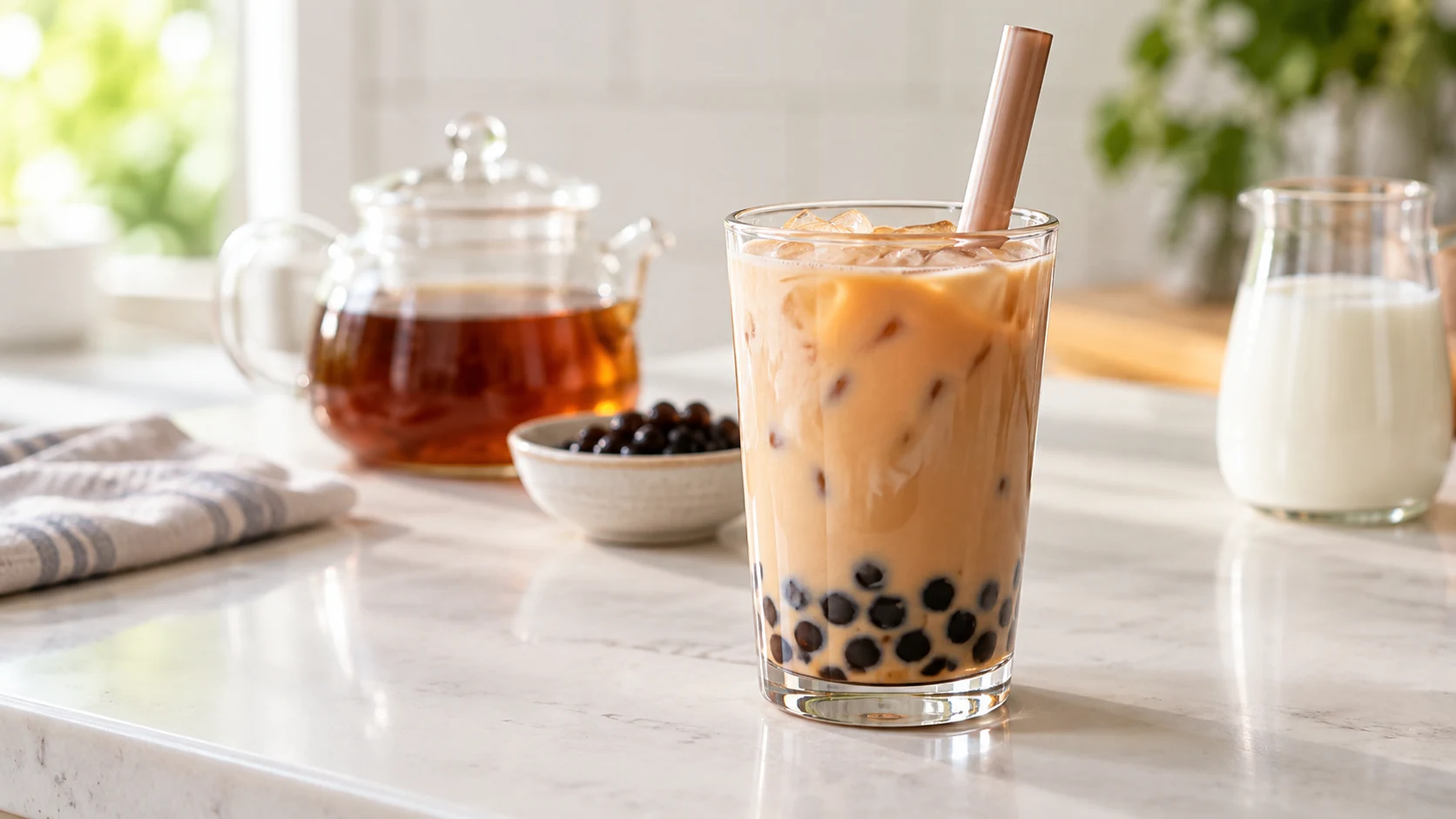
The target is one balanced drink with noticeable tea, pleasantly chewy pearls, and sweetness you can still adjust. Read the entire pearl label before heating water, because its timing determines when every other step should begin.
Ingredients and equipment
For one approximately 16-ounce drink, prepare:
- enough packaged tapioca pearls for one serving, measured as the package directs;
- 6 fluid ounces of water for tea;
- 1 black tea bag, or the label-equivalent loose tea;
- 4 fluid ounces cold milk or an unsweetened plant-based beverage;
- 1 to 2 tablespoons simple syrup or another sweetener, divided;
- ice;
- the water quantity required by the pearl package.
You also need a saucepan large enough for the pearls to move, a tea vessel, a strainer if using loose tea, measuring tools, and a serving glass. The quantities above are an assembly starting point, not a claim about a tested house recipe.
Before beginning, place the milk in the refrigerator, clear a heat-safe space for draining, and make sure the serving glass can accept warm pearls without thermal-shock risk. Use a separate spoon for tasting rather than returning a used straw or spoon to the batch. A calm setup matters because pearl timing often gives little room to search for tools once cooking ends.
Set out a timer as well. Memory is a poor substitute when cooking and covered resting are separate phases.
Read the pearl package first
Identify three numbers before you start: cooking time, covered resting time, and the maker's serving or holding window. Also note the required ratio of pearls to water.
Bossen's Express Cook Big Tapioca uses a 1:10 pearl-to-water ratio, 25 minutes of cooking, and a 5-minute covered rest. A different Bossen large-pearl method uses a 1:6 ratio, 30 minutes of cooking, and a 35-minute covered rest. This method does not choose between them. It asks you to follow the directions attached to the product you bought.
Count backward from serving time. Start a slow-cooking pearl first and brew tea during its cook or rest. For a genuinely quick-cook product, brew and cool the tea before the pearls go into the pot so the topping does not wait unnecessarily.
Brew the simple tea base
Bring water to the temperature specified for the tea. Twinings gives black tea a starting range of 3 to 5 minutes in water near boiling. Use the package instruction when it differs.
Steep one tea bag in the measured 6 ounces of water, then remove it completely. This smaller water volume creates a more concentrated base than an ordinary 8-ounce mug, helping the tea remain present after milk and ice are added. Do not extend the steep indefinitely to create strength; if the first finished drink is weak, increase the measured tea amount next time.
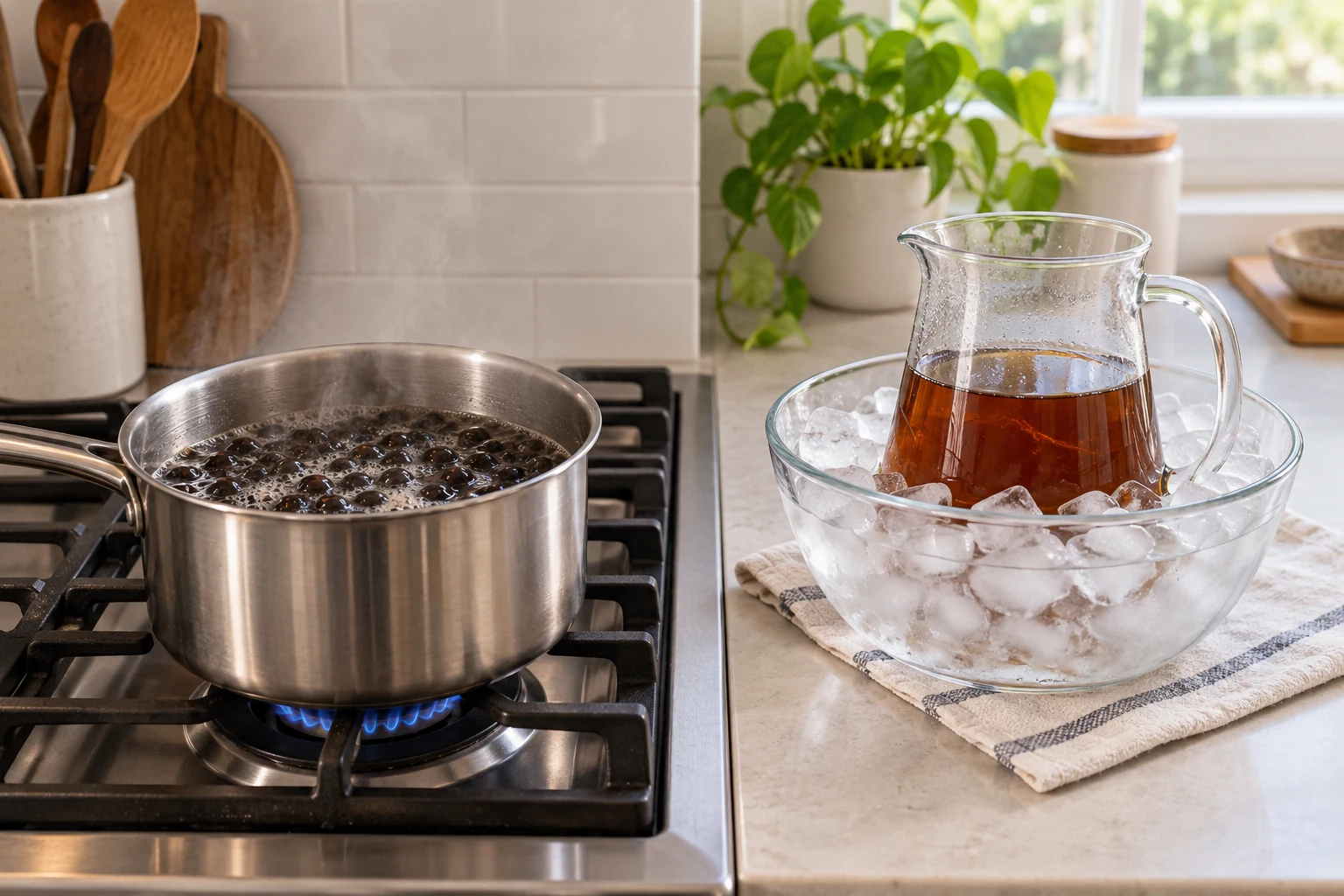
Cool the strained tea in a clean container. An ice bath around the container speeds the process without adding unmeasured water to the tea. Keep the tea covered while the pearls finish.
Cook and sweeten the pearls
Use the pot size, water ratio, boil level, stirring instructions, cook time, and rest time printed for your pearls. Add the pearls only at the stage the maker specifies. Keep enough heat under the pot to maintain the required cooking condition after the pearls enter.
At the end of the stated method, cut or bite one pearl only if the product is ready to be eaten and handled safely. It should not have a dry, chalky center. If it does, return to the package's troubleshooting or completion guidance rather than borrowing a random time from another product.
Drain or rinse only as directed. Then coat the warm pearls with 1 tablespoon of the sweetener. This gives the topping some flavor without committing the entire drink to a high sweetness level. Keep the pearls within the serving window on the package; both cited Bossen products direct users to consume cooked pearls within four hours, but your product may state something shorter.
Assemble in a stable order
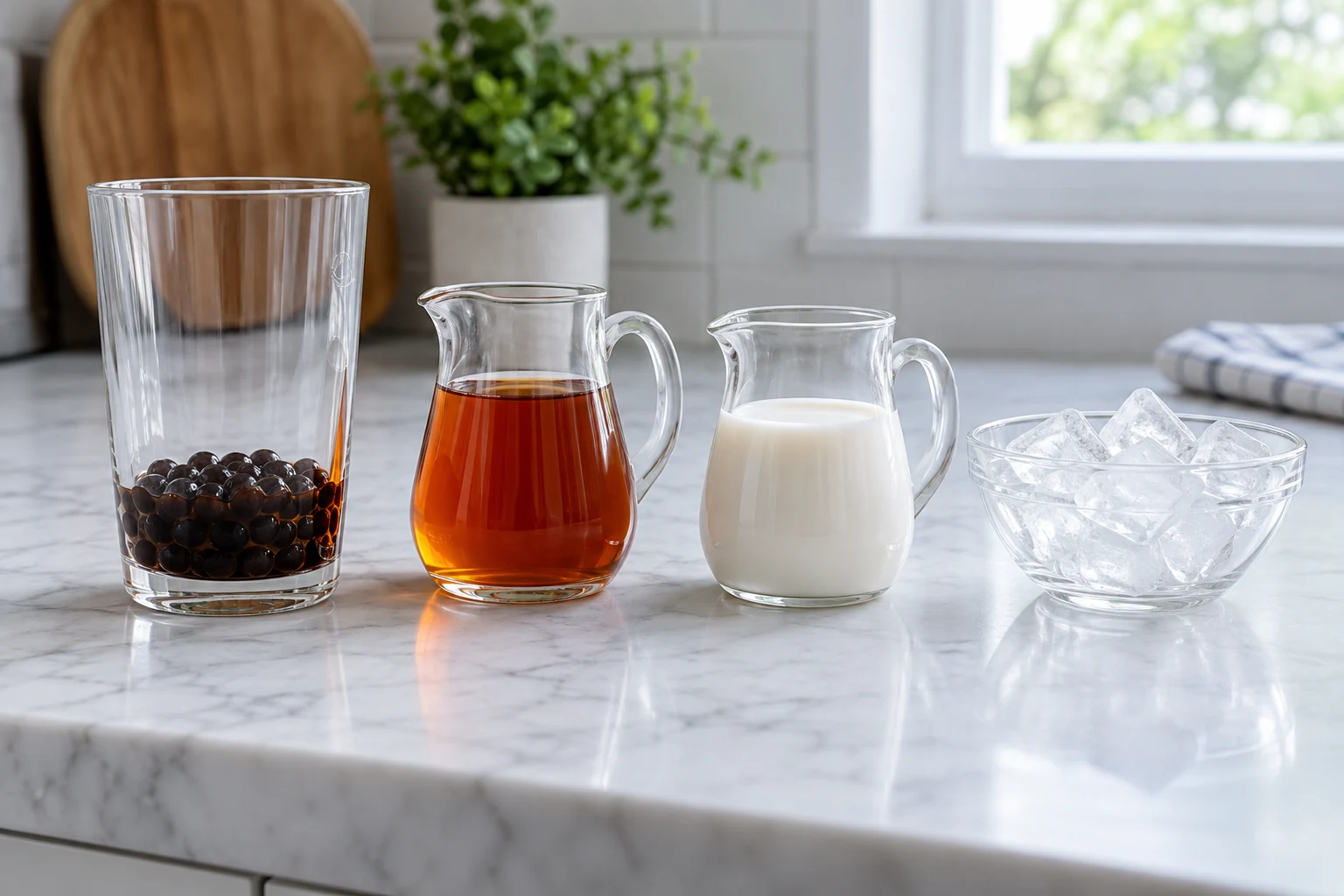
Check that the tea is cool and the pearls are no longer hot enough to melt a glassful of ice immediately. Add the sweetened pearls to the glass, followed by the cooled tea and cold milk. Stir and taste before adding the remaining sweetener.
Add ice last, leaving room to stir. Starting with ice can make it difficult to see whether the liquid components fit, and hot pearls trapped against ice contribute uncontrolled melt. The finished drink should have a visible tea character, but neither milk nor sweetness should erase it.
Serve promptly with a straw wide enough for the topping. Do not assume the drink is shelf-stable because the dry pearls were. Once milk and cooked ingredients are involved, follow their labels and normal refrigeration rules.
Adjust only one dimension
If the drink is too sweet, reduce the syrup mixed into the liquid next time; keep the small pearl coating if it supports the topping. If it is not sweet enough, add sweetener by the teaspoon after assembly.
If the tea is weak, increase tea material in the same 6 ounces while keeping the water temperature and steep duration steady. If it is bitter before milk is added, correct the brew rather than adding more milk and sugar to hide it. If the drink is watery, cool the components more completely and measure the ice instead of immediately increasing every flavoring.
Verify and note
Record the pearl brand and format, package water ratio, cook and rest times, tea identity, steep details, milk quantity, and sweetener quantity. Add one sentence about the next change. That record is the real value of a first cup: it converts a general method into a repeatable method for the ingredients actually in your kitchen.
Refrigerate perishable leftovers promptly. The FDA advises that foods requiring refrigeration should not sit at room temperature for more than two hours, or one hour above 90 degrees Fahrenheit, and that refrigerators should remain at 40 degrees Fahrenheit or below. When a package gives a stricter direction, follow it.
Sources
- How to Brew the Perfect Cup of Tea Twinings
- Express Cook Big Tapioca Bossen
- Tapioca Pearl Recipe - How to Make Boba Bossen
- Are You Storing Food Safely? U.S. Food and Drug Administration