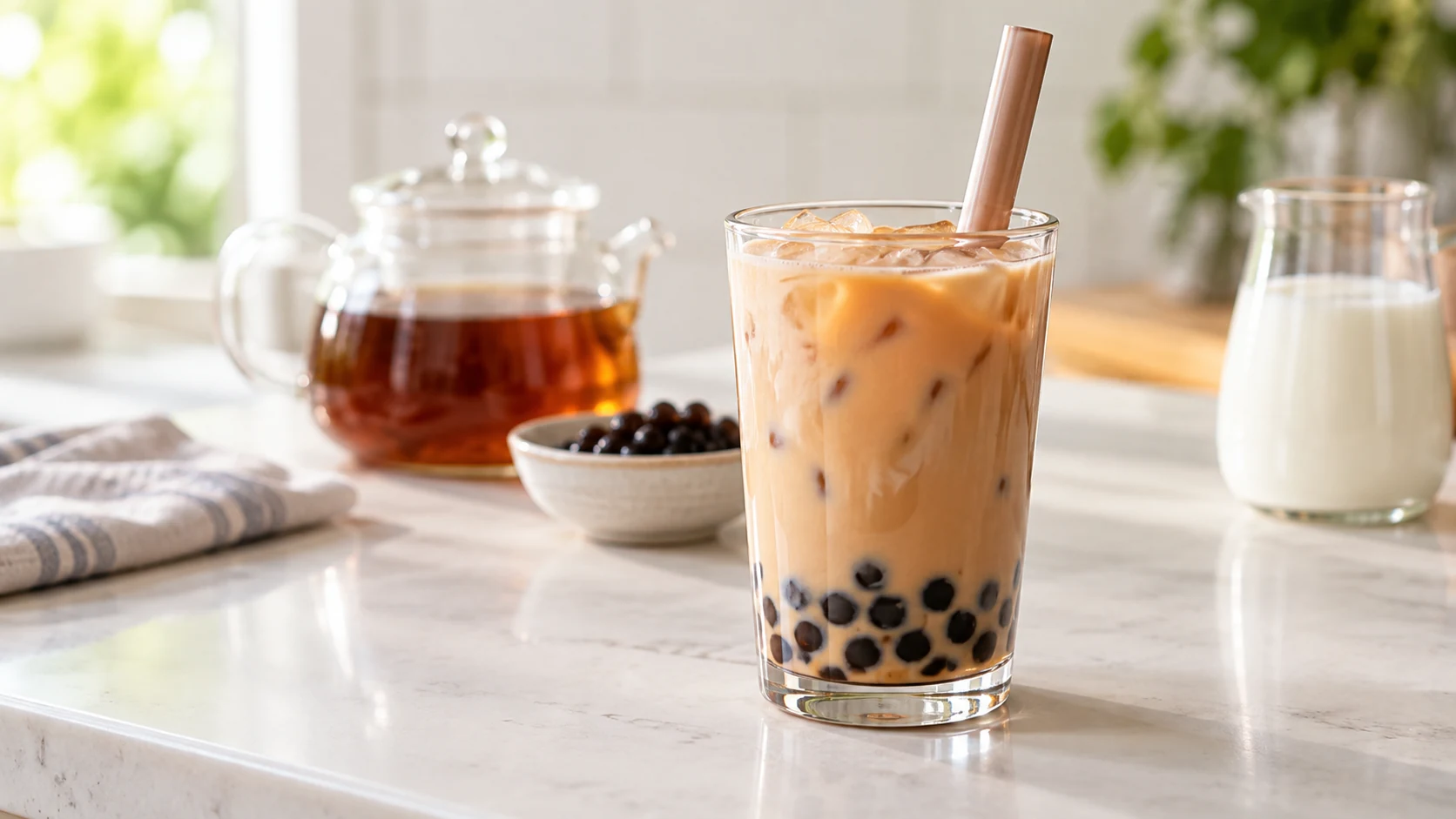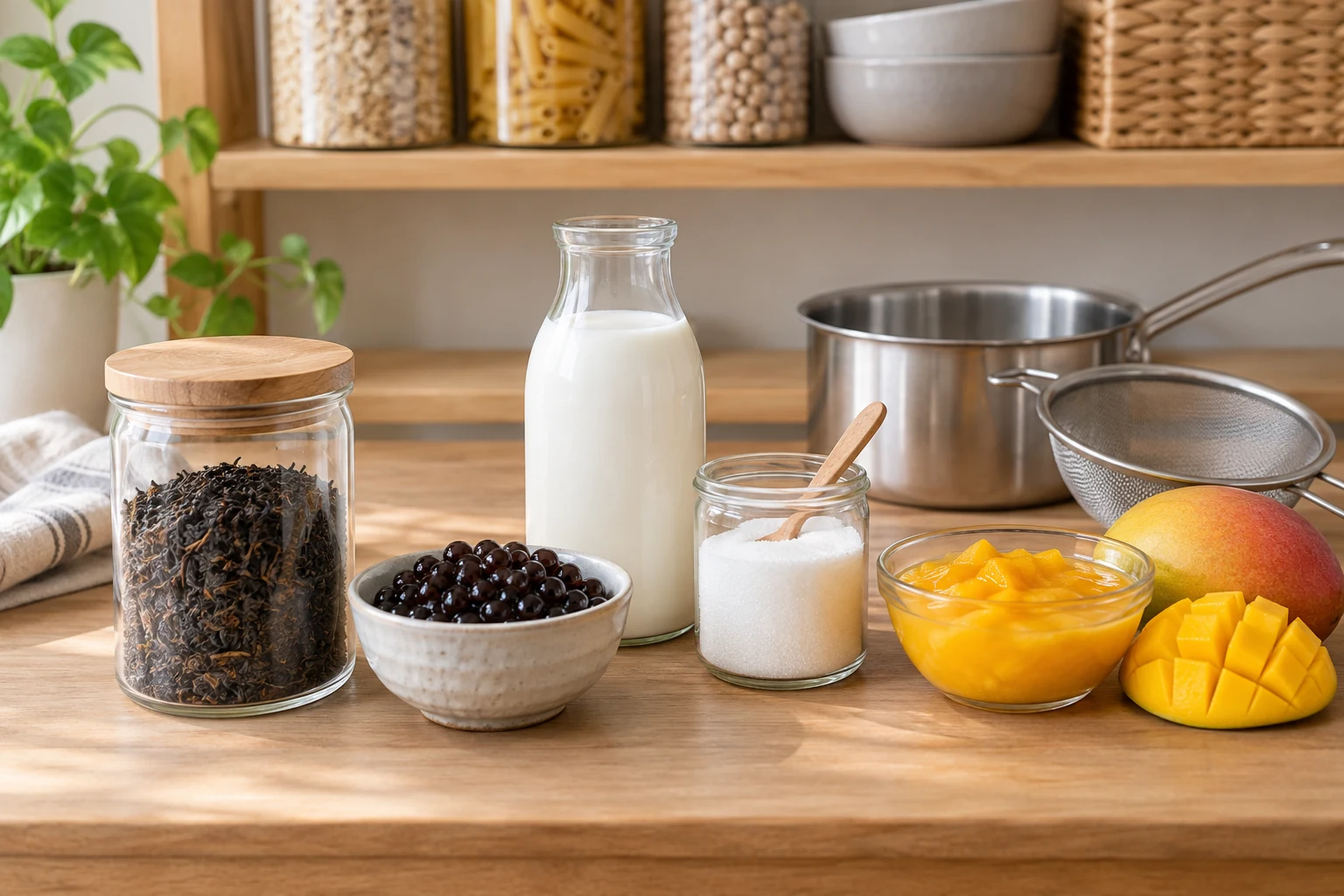
A small boba party works best when guests assemble a few compatible components rather than choose from a miniature cafe menu. Plan one tea, one milk option selected with your guests, one sweetener, and one topping. That leaves attention for the parts that change during the gathering: cold storage, the pearl cooking schedule, and the number of people waiting for a drink.
This timeline is a planning example for six to twelve people. It assumes an indoor gathering, a working refrigerator, and a short drink service. Ask about allergies before shopping. If a guest cannot use a shared station, agree on a separate arrangement before ingredients are opened.
Count drinks before buying ingredients
Start with expected drinks, not just attendance. Eight guests having one drink need eight portions; eight guests having two need sixteen. Write the first round and possible second round separately. Prepare enough cold tea for the confirmed first round, and keep optional supplies unopened where possible. Do not automatically cook twice as many pearls because a second drink is possible.
For a concrete purchasing worksheet, allow 150 milliliters of prepared tea and 100 milliliters of milk per first-round drink, with ice and a modest pearl portion added separately. Six drinks therefore require 900 milliliters of tea and 600 milliliters of milk; twelve require 1.8 liters and 1.2 liters. These are planning quantities that you can replace with your own familiar recipe, not a universal flavor ratio.
Choose cups only after checking the proposed liquid volume. Put measured water, your intended ice portion, and a placeholder for the topping in one cup. Leave room below the rim for stirring. This water-only capacity check prevents discovering at service that twelve nominally large cups cannot hold twelve complete drinks.
Calculate dry pearls from the serving and yield information on the exact bag. Cooked volume cannot reliably be inferred from an unrelated brand. If the package does not explain household quantities, choose a product with clearer directions instead of making the party your first attempt at guessing the yield.
The day before: buy time and refrigerator space
Check the refrigerator with the actual pitchers and containers you intend to use. A pitcher that fits when empty may block a shelf once its lid is attached. Reserve space for milk, prepared tea, and any ingredient that requires refrigeration after opening. Keep food containers separate from raw ingredients that might leak.
Set out dry equipment: measuring jugs, a tea strainer, a pot large enough for the pearl instructions, clean serving spoons, cups, napkins, and labels. Assign one spoon to each topping. Put spare clean utensils nearby so a dropped spoon can be replaced immediately without stopping the whole line.
Make a short shopping list in three columns: ingredients, cold-holding supplies, and serving equipment. Ice for drinks and ice used around containers have different jobs. Budget for both if you are using an ice bath. Keep the drink ice protected with its own scoop rather than letting hands or serving cups enter the bag.
If you prepare tea ahead, cool and refrigerate it promptly in suitable containers rather than leaving a large hot vessel on the counter overnight. The FDA buffet guidance calls for cold perishable foods to remain at 40°F or below. Keep milk in its original labeled container until you need to pour a service portion.
Work backward from the first cup
Use the pearl package to schedule the last major cooking job. Bossen's Express Cook Big Tapioca directions, for example, include twenty-five minutes of cooking and a five-minute covered rest, plus boiling the water, rinsing, and sweetening. That illustrates why a thirty-minute label sequence is not the same as thirty minutes from a cold kitchen to finished service. Other products require different schedules.
Allow a separate margin for bringing the full pot of water to a boil. Do not crowd a small saucepan with a party quantity or improvise a reduced water ratio. If the required pot will not fit your stove, plan two properly sized batches or reduce the number of drinks served together.
While the pearls cook, strain the tea if necessary, check the cold ingredients, and place empty cups at the start of the station. Keep the actual milk refrigerated until service begins. Write the pearl batch's completion time on a removable label; that record is more useful than trying to remember whether you started before or after the guests arrived.
Give yourself a short assembly check before opening the station. Measure one drink with the selected utensils and taste the liquid after it is at its intended drinking temperature. If it needs a small adjustment, change the service instructions once. Avoid making each guest solve an entirely different tea-to-milk ratio.
Run a short serving window
Arrange the station in the order cups, pearls, tea, milk, sweetener, then stirrers and napkins. A simple card can show the suggested amounts while leaving sweetness optional. Put the sticky sweetener toward the end so drips do not cross every other ingredient. Keep the refill area behind the station, away from used cups.
Serve small quantities and replace the whole container when needed. FDA recommends fresh serving dishes instead of adding new food to a partly used dish. In practice, two small milk pitchers can be easier to manage than one large jug: one is in service while the other remains refrigerated.
Assign one person to watch supplies and time. This is particularly helpful if you are also preparing food. A host who keeps disappearing to cook cannot reliably notice a milk pitcher left away from its ice bath or a spoon moved into the wrong topping. Reduce the menu if nobody can manage the station.
Close with a leftover decision
End pearl service when the planned round finishes, rather than keeping a bowl available indefinitely. A manufacturer's best-served window describes that product's recommended quality; it does not override safe handling of the rest of the drink. Do not use sweet syrup as evidence that cooked pearls can be held without a limit.
For perishables outside temperature control, FDA gives a two-hour limit, shortened to one hour above 90°F. Treat preparation and serving time as part of the same exposure history. Discard food that exceeds the limit or whose history is uncertain; putting it back in the refrigerator does not erase that uncertainty.
Keep unopened supplies for another day according to their labels. Record how many first and second drinks were actually requested and how much tea remained. Those two numbers improve the next shopping list far more than buying a bigger topping assortment.
Sources
- Serving Up Safe Buffets — U.S. Food and Drug Administration
- Express Cook Big Tapioca: Cooking Directions — Bossen