This is a source-based method and has not been tested by Boba Bloom. Scratch tapioca pearls are sensitive to water temperature, starch hydration, working speed, and size. No texture guarantee is implied. If a predictable first drink matters more than the project itself, use packaged pearls and follow their directions.
Two educational sources use different ratios and procedures, which is important evidence rather than an inconvenience. Scientific American's Science Buddies activity demonstrates a small hot-water dough, while Science Centre Singapore publishes a brown-sugar method with a different estimated ratio. This guide follows one bounded small-batch path and uses observable stop conditions.
Use tapioca starch, not a look-alike flour
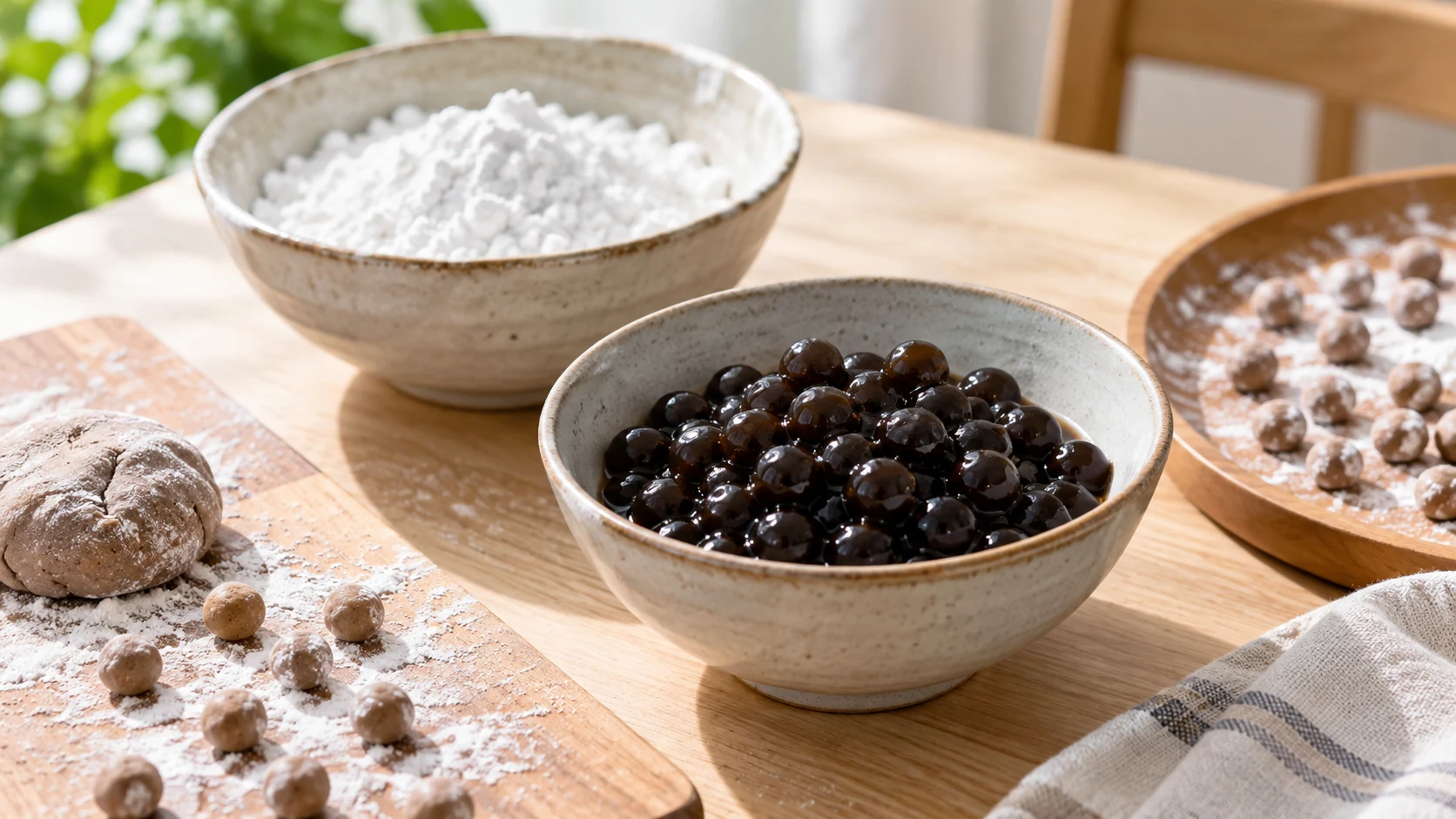
Choose a package labeled tapioca starch or tapioca flour. Bob's Red Mill explains that those two names refer to the same starch from cassava root. Cassava flour is different because it includes more of the root and should not be assumed to behave the same way.
For a small practice batch, prepare:
- 6 teaspoons tapioca starch, plus more for dusting;
- 2 teaspoons freshly boiling water;
- 1 teaspoon brown sugar, optional;
- abundant water for cooking;
- 1 tablespoon brown sugar plus 1 tablespoon water for an optional finish.
The 6-to-2 starch-to-water measure comes from the Science Buddies activity. Adding sugar changes the dough, so the optional teaspoon is a cautious adaptation, not part of that source's demonstrated formula. A first attempt can omit it and put sweetness in the finish instead.
Form the hot dough quickly
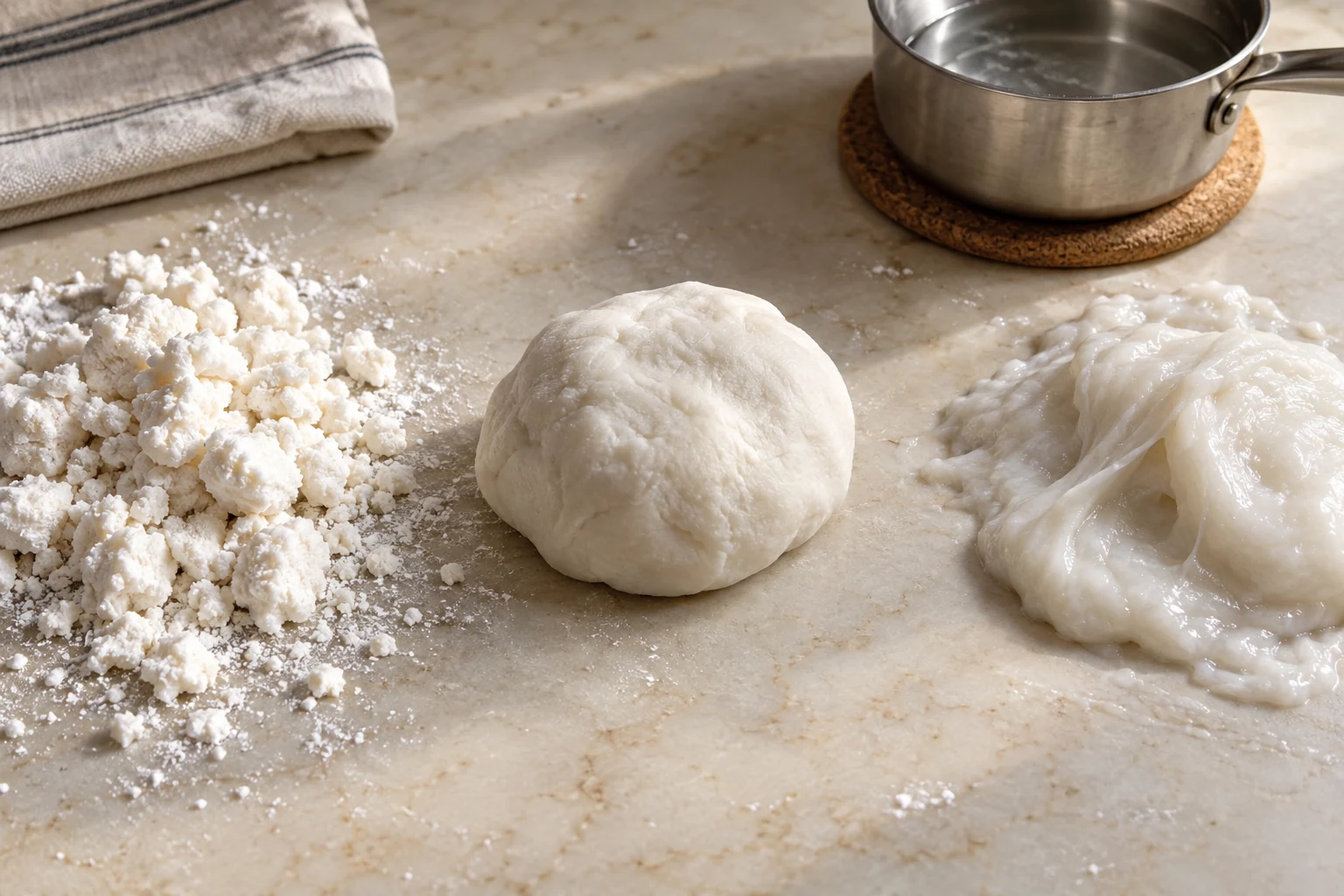
Place the measured starch in a heat-safe bowl. If using the optional teaspoon of sugar, dissolve it completely in the 2 teaspoons of boiling water. Add the liquid to the starch immediately and mix with a spoon because the mixture is hot.
Hot liquid matters. Science Buddies explains that cold-water starch does not form the same workable dough; heating lets starch granules absorb water and gelatinize. Science Centre Singapore likewise begins its method by heating brown sugar and water and using the hot liquid to activate part of the starch.
When the mixture is cool enough to touch safely, press and knead it briefly. A workable dough should hold together without flowing and should bend enough to roll. If dry powder remains after thorough mixing, add boiling water one or two drops at a time. If the mass becomes gluey and will not hold a shape, dust in tapioca starch a small pinch at a time.
Stop if repeated corrections create alternating wet and dry patches. Large rescue additions make the result less predictable. Starting a new tiny batch can waste less starch than continuing an unstable dough.
Shape while protecting the dough
Divide the dough and roll each portion into a thin rope. Science Buddies suggests pieces about 5 millimeters in diameter; Science Centre Singapore describes rolling logs around 1 centimeter thick before cutting small pieces. Smaller, consistent pieces are the safer goal for even cooking in a home batch.
Cut equal pieces and roll each quickly between your palms. Keep unshaped dough covered so its surface does not dry. Lightly dust finished pearls with tapioca starch and separate them on a tray.
Consistency matters more than perfect roundness. A large pearl and a small pearl in the same pot do not reach the same center texture at the same moment. Remove visibly oversized pieces or reshape them before cooking.
Do not prepare a large quantity for storage on the first attempt. This article does not establish a validated shelf life for raw homemade pearls.
Cook according to the chosen method
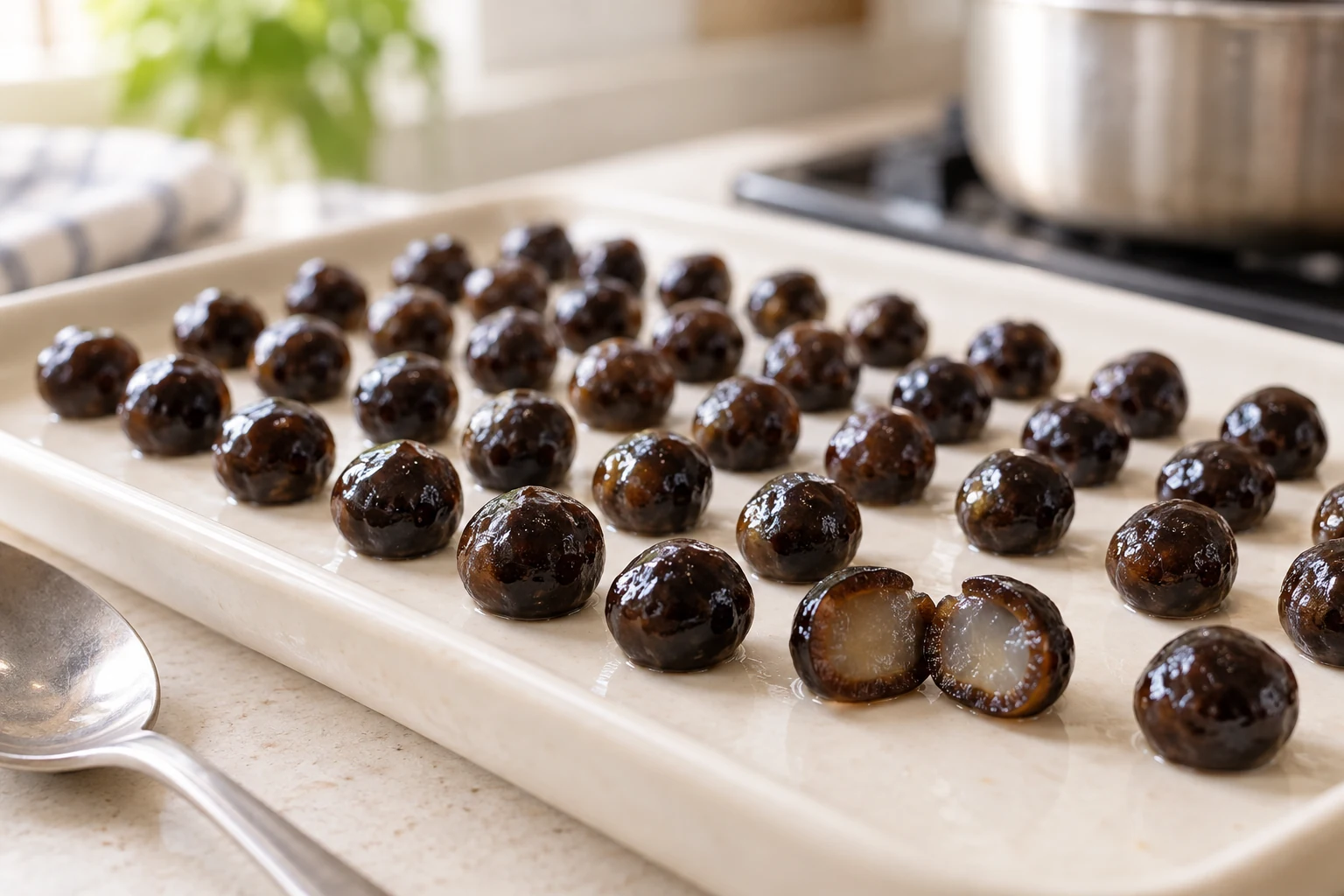
Bring a generous pot of water to a full boil. Add the pearls gradually and stir gently so they do not settle into one mass. Keep enough water and heat for free movement.
Science Buddies' activity cooks its small pearls for about 20 minutes and then places them in cold water. Science Centre Singapore provides options that include boiling shaped pearls for roughly 15 to 20 minutes, depending on the version of its method. Those timings belong to their respective size and dough procedures. Begin checking your small, consistent pearls within that sourced window rather than treating 20 minutes as a guarantee.
Remove one pearl carefully, cool it, and cut it open. A dry, opaque, chalky center indicates that the interior has not hydrated. A pearl that collapses or smears may be overcooked or may have started from an unstable dough. Continue only in short intervals and check again.
If many pearls split, dissolve, or cook unevenly, stop and record the dough texture and sizes. More boiling cannot make inconsistent pieces identical.
Add a bounded brown-sugar finish
For a simple finish, dissolve 1 tablespoon brown sugar in 1 tablespoon water over low heat. Add the drained cooked pearls and stir briefly, just until coated. This finishing ratio is a proposed small-batch starting point and has not been tested by Boba Bloom.
Remove the pan before the syrup becomes thick and candy-like. Add water by the teaspoon if it no longer flows around the pearls. The finish should contribute flavor while leaving the topping spoonable.
Use the pearls promptly. Homemade pearls do not inherit the holding window of a commercial product, and this source set does not establish a validated room-temperature service period. Make only what the current drinks need.
Know when to stop or switch
Dough crumbles immediately: the starch did not receive enough hot liquid or the liquid cooled before mixing. Add only drops of boiling water; restart if hydration remains patchy.
Dough flows like paste: too much liquid entered or the method did not form a stable hot dough. Small starch additions may help, but do not keep escalating an unmeasured ratio.
Pearls have hard centers: size was inconsistent, cooking was incomplete, or the method did not suit the dough. Check a cooled cut pearl, not appearance alone.
Pearls dissolve: the dough may have been too wet or insufficiently formed. Discard the failed batch rather than serving starch-thickened cooking water as a topping.
The project no longer fits the day: packaged pearls are a valid alternative. Their instructions and quality controls provide a more predictable route.
Handle the batch conservatively
Use clean hands, tools, water, and work surfaces. Refrigerate any perishable finished drink promptly, but do not assume refrigeration will preserve the intended pearl texture. The FDA advises refrigerating foods that require it within two hours, or one hour above 90 degrees Fahrenheit, and warns that smell or appearance alone cannot prove safety.
Record starch brand, exact water and sugar, dough corrections, rope diameter, cooking time, and center appearance. Until the method is actually repeated and verified, describe the result as an experiment, not a Boba Bloom-tested recipe.
Sources
- Are tapioca flour and tapioca starch the same product? Bob's Red Mill
- Make Boba for Bubble Tea Scientific American and Science Buddies
- Bubble Tea Science Centre Singapore
- Are You Storing Food Safely? U.S. Food and Drug Administration