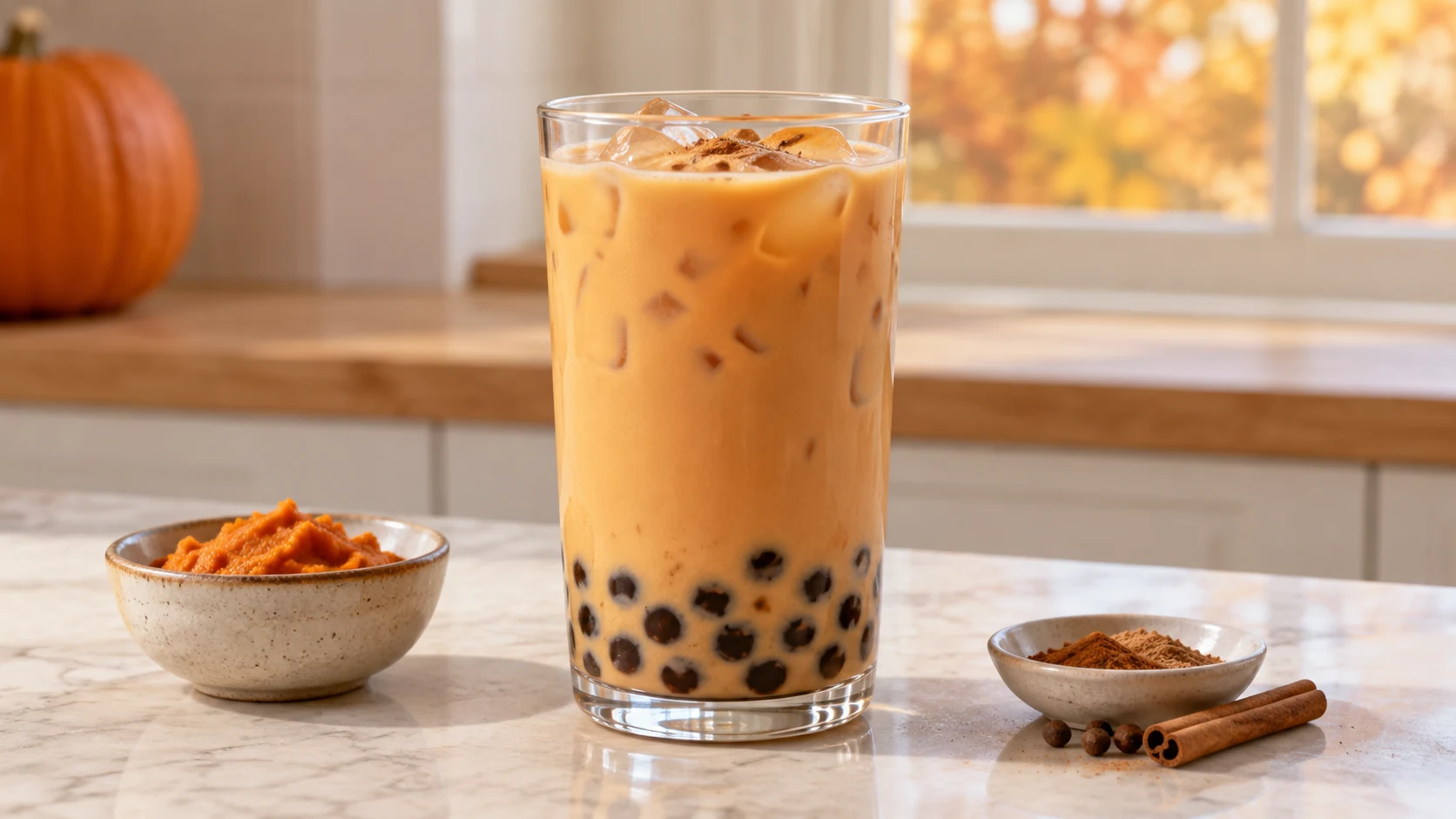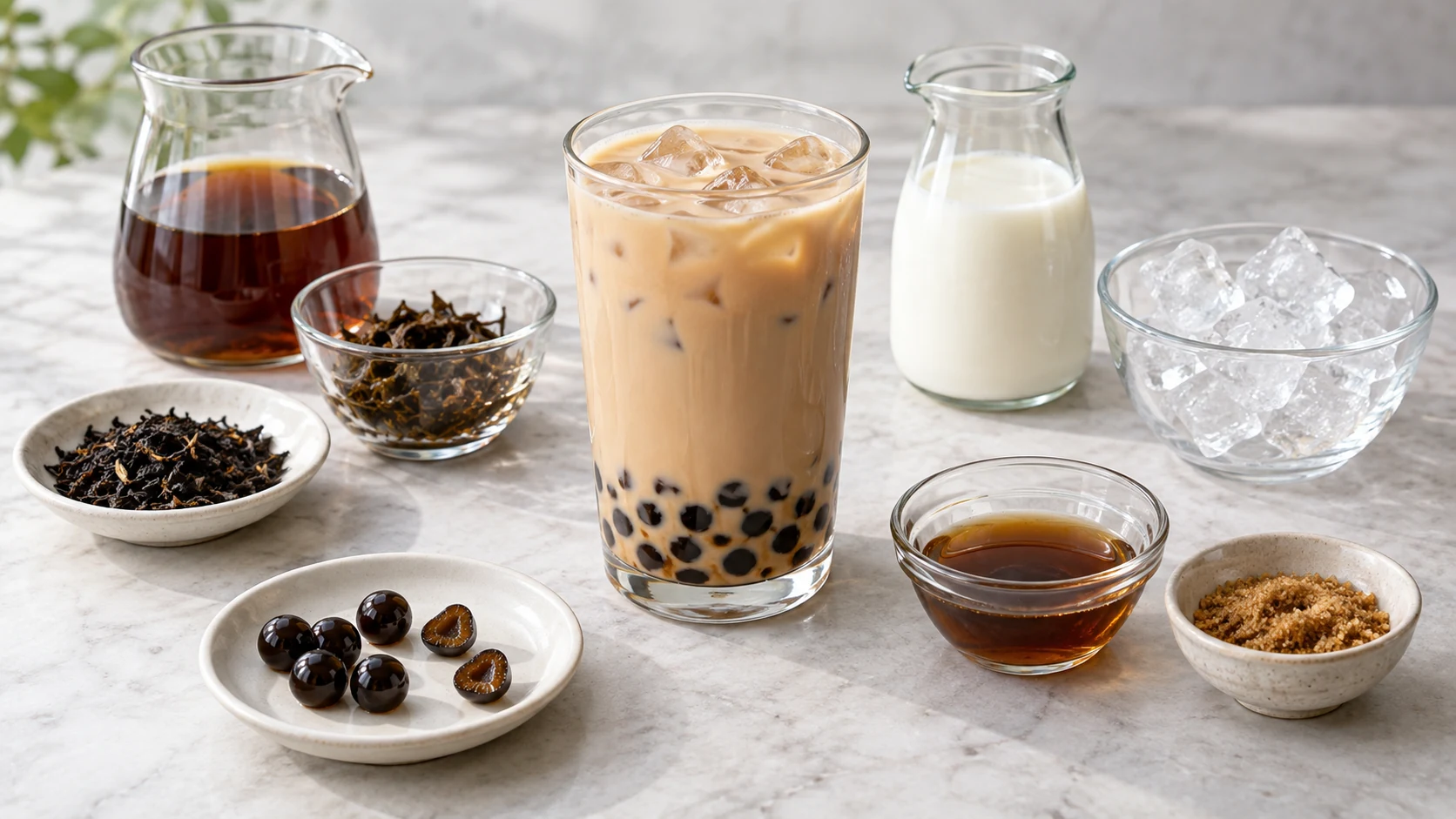
Cocoa milk tea is easier to control when cocoa and sugar enter the recipe separately. Use a package identified as unsweetened cocoa powder, then decide how much sweetener the tea and milk need. A chocolate drink mix may already contain sugar, milk ingredients, or other additions, so it is not a direct spoon-for-spoon replacement.
The main technique is to work the cocoa into a small amount of hot liquid before adding the full volume of milk tea. Hershey's own hot-cocoa method starts with cocoa, sugar, and hot water before introducing milk. The tea version below uses that sequence as a practical starting principle, not as a claim that the manufacturer tested this milk-tea formula.
Read the cocoa package before measuring
Look at the product name and ingredient panel together. Select plain unsweetened cocoa for the method here. If you have a sweetened chocolate powder, use its preparation and nutrition information instead, and recognize that changing the powder quantity changes several ingredients at once.
You do not need to buy a special boba powder to try the combination. A small existing cocoa package gives you a way to explore the flavor without purchasing a large cafe supply bag. Keep the container dry, use a clean spoon, and follow its storage instructions after opening.
Record the exact cocoa you use. Different products may taste different at the same measured amount, so a useful recipe note includes the package identity as well as the grams. Do not judge the required sweetener only from how dark the powder looks or assume the darkest drink will have the strongest tea flavor.
Check the milk and optional topping labels at the same time. Starting with unsweetened cocoa does not make the completed cup unsweetened if the milk, syrup, or pearls already provide sugar. It simply gives you more direct control over the cocoa ingredient.
Start small enough to adjust
For a first cup, an editorial starting formula is 4 grams of unsweetened cocoa, 20 milliliters of hot water, 120 milliliters of prepared black tea, 120 milliliters of milk, and optional measured sweetener. This gives approximately 260 milliliters of liquid before any topping or ice. It is an adjustable proposal.
Use a scale if you have one because loosely filled and packed spoonfuls can differ. If you are measuring by spoon, follow the package's listed weight conversion and level the spoon consistently. Keep some prepared tea and milk in reserve for small adjustments rather than committing every ingredient to a large pitcher.
Choose a familiar black tea and brew it by the package directions. Strain it before introducing cocoa. That keeps leaf removal separate from powder mixing and makes it easier to tell whether a later particle is a cocoa clump or a piece of tea leaf.
For the first attempt, leave out additional spices, fruit puree, and flavored syrups. You need to learn whether the cocoa amount and tea strength work together before introducing a third dominant flavor. Pearls are optional; finishing the liquid first makes its texture easier to assess.
Make the paste in three additions
Put the measured cocoa in a small heat-suitable bowl or jug. Break up obvious dry lumps with the back of a spoon. Add only part of the hot water and press the mixture together, scraping the corners of the vessel. A wide enough bowl lets the spoon reach powder that a narrow mug may hide.
Add the remaining water in small increments while stirring. Aim for a cohesive paste with no visible dry pockets, then a pourable slurry. If you pour the full milk volume onto untouched powder immediately, you lose the opportunity to work directly on those pockets in a small, concentrated mixture.
Introduce a little of the brewed tea and stir again before adding the rest. Then add the milk gradually. Scrape the cocoa bowl into the drink so the measured powder does not remain partly on the sides. If you use a whisk, work gently enough that liquid does not splash over the rim.
Hershey's published cocoa recipe warms milk after the initial cocoa-water stage and advises against boiling the milk mixture. For this adaptation, keep any heating gentle and attended. Do not close hot liquid in an ordinary cold-drink shaker; use an open vessel suitable for the temperature.
For an iced version, chill the liquid appropriately before pouring it onto your chosen amount of clean ice. Count the paste water as part of the recipe's liquid, and remember that melting ice adds more water. Begin with a modest ice portion so you can assess dilution rather than hiding the first result beneath a full cup of cubes.
Separate clumps from settling
If you find a visible dry lump, the paste stage needs attention. Press it against the bowl before adding more liquid. If the finished drink contains persistent lumps, a fine strainer may remove them, but some cocoa will then be removed as well; note that the cup no longer contains all the amount initially measured.
A drink that becomes uneven after standing presents a different practical problem. Stir before taking the next sip and see whether the texture becomes acceptable again. Do not assume every speck means you need more sugar or that vigorous mixing will keep every cocoa product perfectly uniform indefinitely.
If the liquid tastes too powder-heavy, reduce the cocoa in the next small batch rather than trying to conceal it with syrup. If tea is difficult to identify, first reduce the cocoa or milk proportion. Change one component at a time; increasing tea, sugar, and milk together makes the next result difficult to interpret.
Account for sugar without guessing
FDA distinguishes total sugars from added sugars: added sugars are already included in the total. Use the actual label values for the milk, cocoa, sweetener, and topping. A naturally sweet-tasting ingredient is not an instruction to invent its sugar content, and unsweetened on one package does not describe the finished recipe.
For any packaged ingredient, multiply its labeled sugar by the portion you use divided by the labeled serving. A hypothetical syrup with 10 grams of sugar per 20 milliliters contributes 5 grams when you use 10 milliliters. Keep grams and milliliters separate unless the package provides a conversion for that ingredient.
Finish the cup by adjusting only the measured sweetener you control, then record cocoa weight, tea volume, milk volume, and that addition. For another serving, repeat the paste process with the amount needed. This preserves the useful distinction between increasing chocolate flavor and increasing sugar, which a sweetened powder blend cannot offer in the same way.
Sources
- HERSHEY'S Perfectly Chocolate Hot Cocoa — Hersheyland
- Added Sugars on the Nutrition Facts Label — U.S. Food and Drug Administration
- Serving Size on the Nutrition Facts Label — U.S. Food and Drug Administration