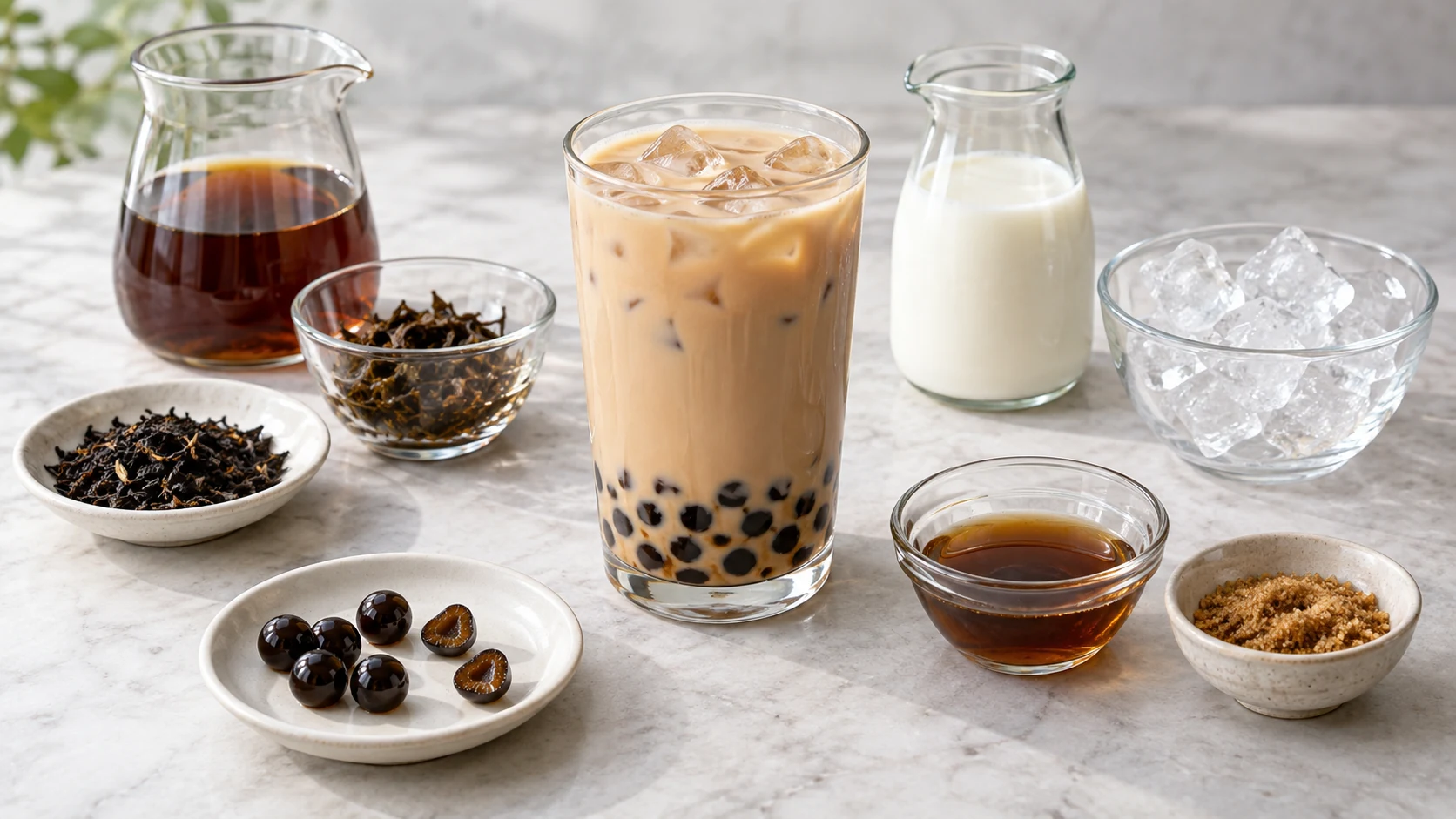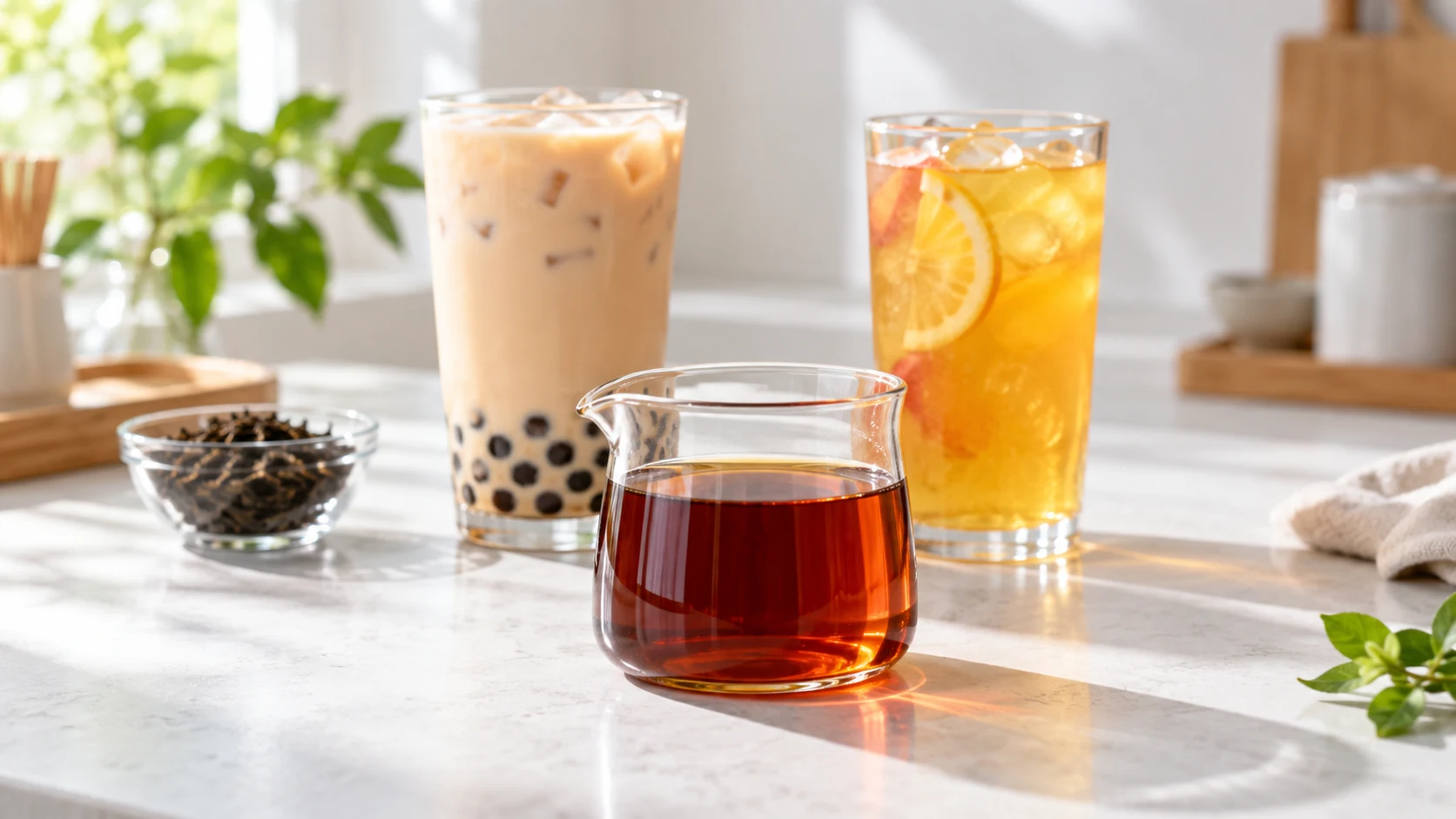
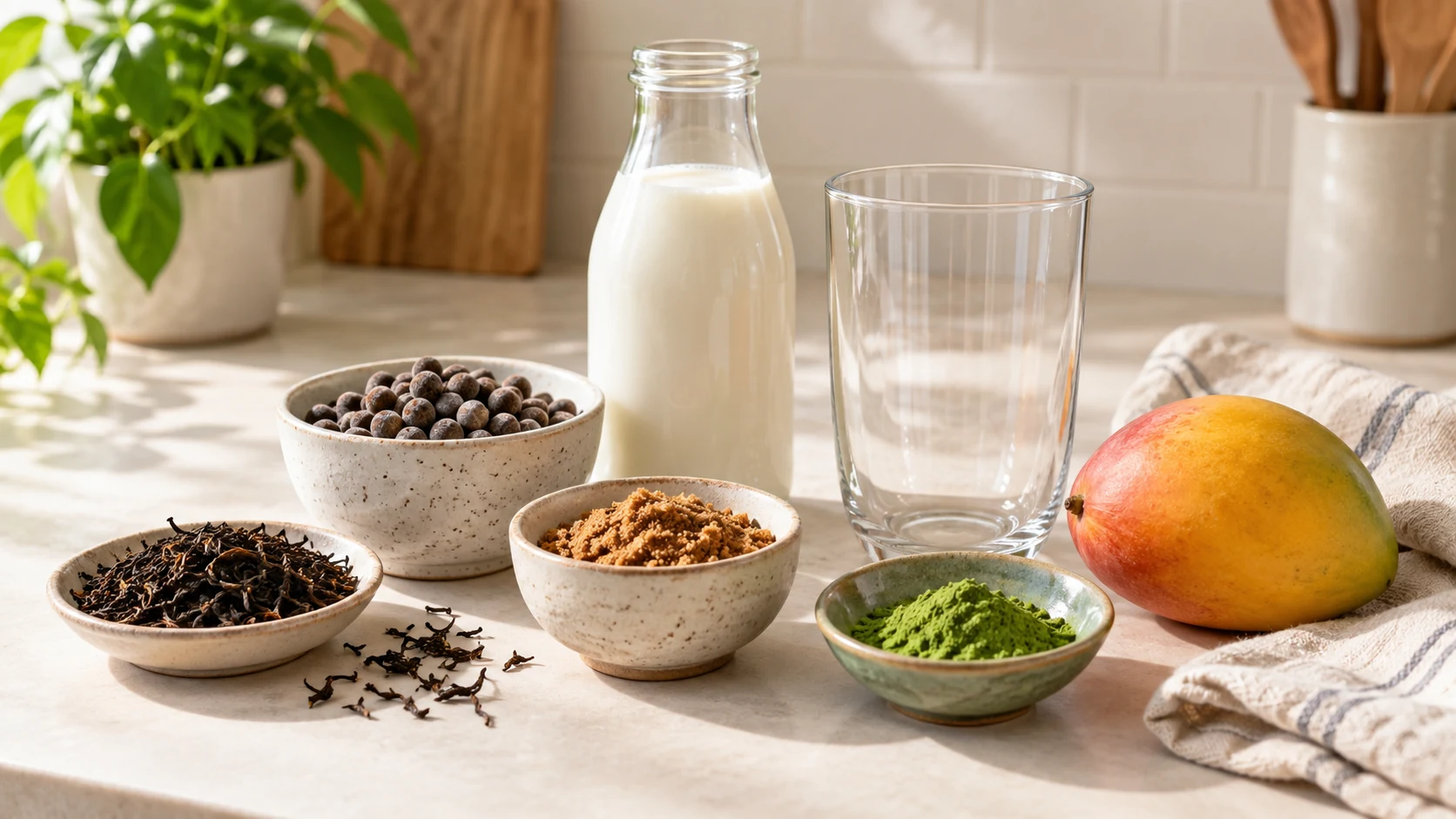
The easiest way to waste money on homemade bubble tea is to shop as if you are stocking a cafe. A home pantry has a different job: it should support the drinks you will actually make, fit the storage space you have, and leave as few half-used specialty packages as possible.
Start with one drink family, then buy the smallest compatible set of ingredients for it. The seller matters, but the package matters more. Clear cooking directions, an ingredient list, allergen information, a usable date, and storage instructions tell you far more than a dramatic product name or an oversized “starter kit.”
Start with the drink, not the cart
Choose one of three practical starting paths.
Classic milk tea: black tea, packaged tapioca pearls, milk or a plant-based alternative, and one sweetener. This is the shortest route to a recognizable first cup.
Fruit tea: green or black tea, one fruit component such as juice or puree, and an optional topping. Skip milk until you understand how the fruit and tea behave together.
Matcha latte: matcha, milk or a plant-based alternative, a sweetener, and optional packaged pearls. Matcha needs its own mixing method, so it should not be treated as a substitute for a tea bag.
Buying for one path first prevents a common pantry problem: several toppings and syrups but no coherent drink. Once the first drink works, add one component that creates a genuinely different result, not another version of the same flavor.
Choose the pearl format first
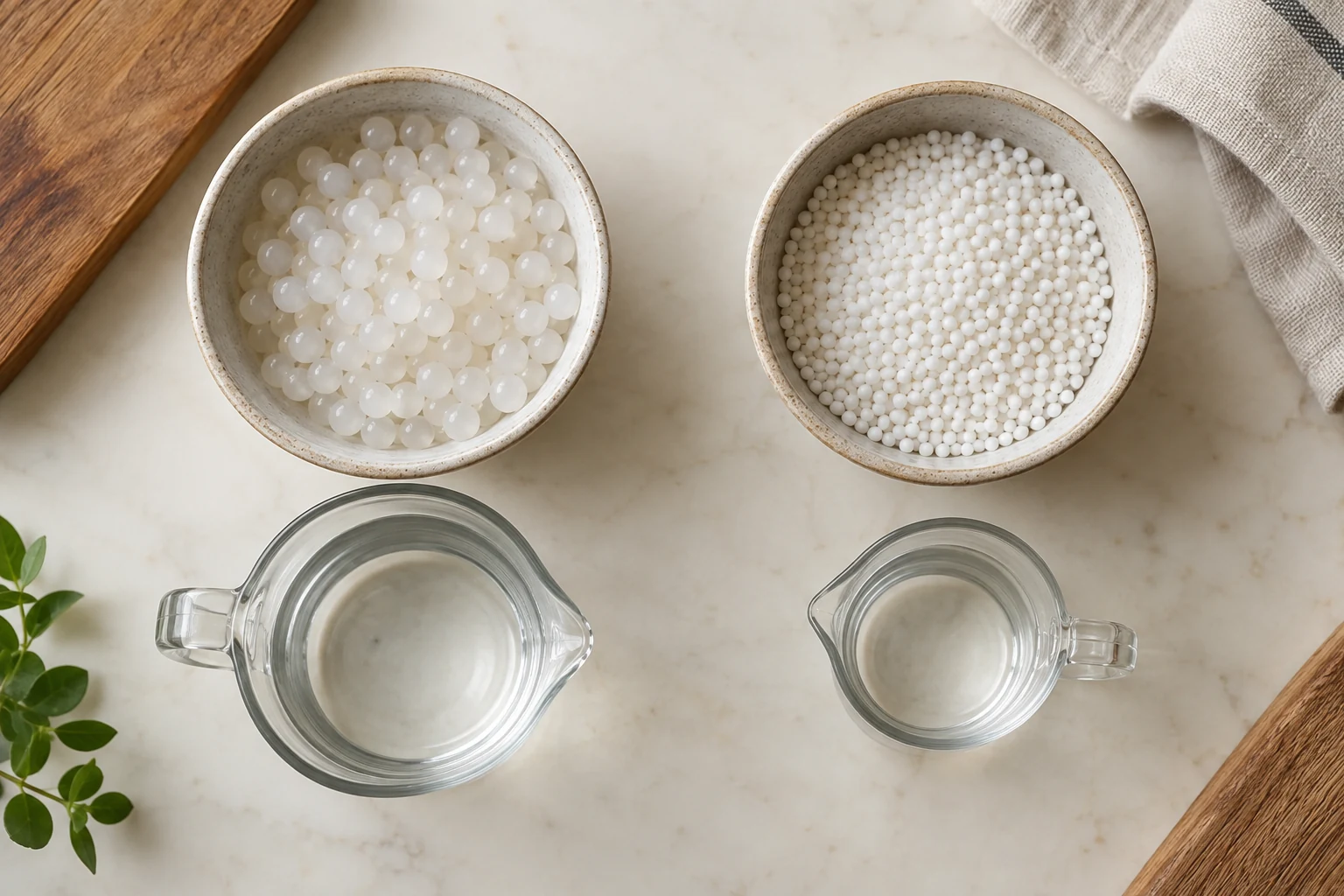
Tapioca pearls control more of the workflow than most beginners expect. Products sold as instant, express-cook, quick-cook, and traditional pearls can require very different amounts of water and time. The safest shopping rule is simple: do not buy pearls unless you can read the directions before checkout.
For example, Bossen's current directions for its Express Cook Big Tapioca use a 1:10 ratio of pearls to water, followed by 25 minutes of cooking and a 5-minute covered rest. Its separate recipe for another large-pearl product uses a 1:6 ratio, 30 minutes of cooking, and a 35-minute covered rest. Those are not interchangeable instructions. They demonstrate why the directions for the exact bag in your hand must control the method.
Package size matters too. A commercial bag may look economical by weight but become awkward for a household that makes two drinks a week. Check how quickly the maker says to use an opened package, whether the bag can be resealed, and how much cooked product a normal serving requires. A smaller, more expensive bag can be the less wasteful purchase.
Read five package signals
Before comparing stores, inspect these five signals on every packaged ingredient.
- Identity: “Tapioca flour” and “tapioca starch” can name the same cassava-root starch, according to Bob's Red Mill, but cassava flour is a different product made from more of the root. For scratch pearls, the label needs to say tapioca starch or tapioca flour.
- Directions: Look for quantities, temperatures, cooking time, resting time, and any after-opening instruction. A recipe on another website does not override the manufacturer's directions for your product.
- Ingredients and allergens: Milk, soy, tree nuts, and sesame are among the major allergens that require attention in the United States. The FDA advises people with food allergies to read labels and avoid the foods that affect them. “Dairy-free” does not mean free from every allergen.
- Sweetness already present: Flavored powders, sweetened plant beverages, condensed milk, fruit preparations, and some instant pearls may already add sugar. Counting each as if it were neutral produces a needlessly sweet drink.
- Storage and date: Note whether the product is shelf-stable only while unopened, needs refrigeration after opening, or carries a short use window. If the maker provides a shorter rule than a general pantry guide, follow the maker.
Photograph the label when shopping in person. Online, save the product page and check the delivered package again, because formulations and instructions can change.
Build a one-week starter pantry
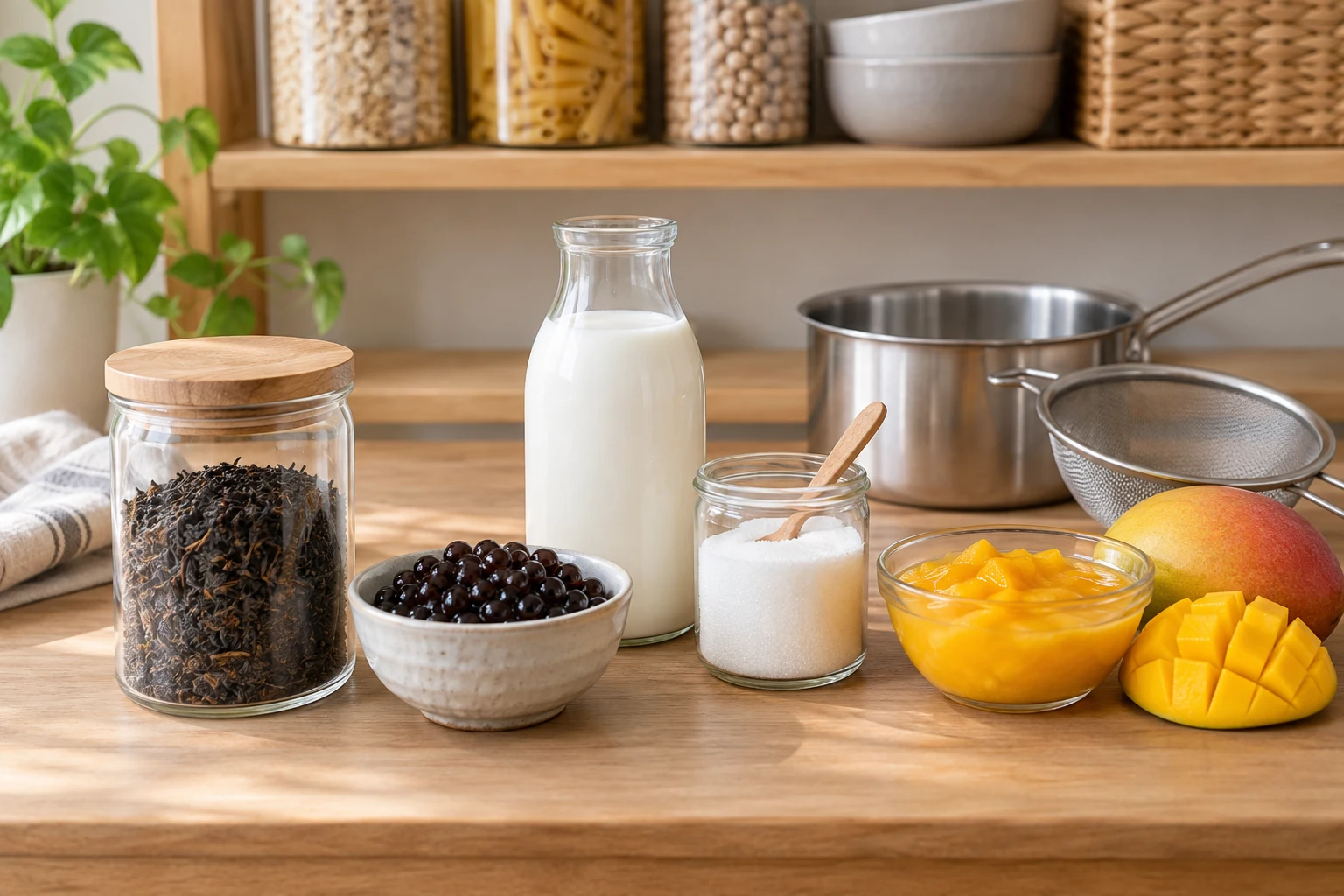
A compact first pantry needs roles, not abundance:
- one black tea that lists brewing directions;
- one package of pearls with readable household-scale instructions;
- one unsweetened milk or plant-based beverage;
- one plain sweetener, such as granulated or brown sugar;
- one optional flavor component, such as mango puree or matcha.
Add a fine-mesh strainer, a saucepan with enough room for boiling water, measuring spoons, a liquid measuring cup, and a wide straw if you do not already own them. You do not need a sealing machine, branded shaker, syrup pump, or a collection of powders to make a first drink.
For plant-based beverages, compare the actual cartons rather than assuming every oat, soy, almond, or coconut product is equivalent. The FDA notes that composition varies with the plant source, processing method, and added ingredients. An “original” product may be sweetened, while an “unsweetened” product may still contain stabilizers or fortification. That is not automatically good or bad; it is information that affects sweetness, texture, allergens, and how the drink should be adjusted.
Match the channel to the risk
A local Asian grocery store is useful when you want to inspect labels, compare package sizes, and avoid shipping a single heavy bag. Stock varies, so check dates and make sure directions are present in a language you can follow accurately.
A specialist bubble-tea supplier often provides detailed cooking directions and a broader range of pearl formats. The trade-off is that many packages are designed for food service. Verify the net weight and opened-package guidance before treating the unit price as a bargain.
A general online marketplace offers convenience but requires more scrutiny. Confirm who the seller is, whether the listing shows the complete package, and whether the product received matches the page. Avoid listings that copy a brand photo but omit the ingredient panel, date information, or directions.
A tea producer or established tea retailer is often the clearest source for tea-specific brewing guidance. The best tea for a beginner is not necessarily the rarest one; it is a tea with a flavor you like, directions you can repeat, and a package size you can finish while it is still fresh.
Cold items deserve a stricter channel decision. The FDA advises refrigerating foods that require refrigeration promptly and checking storage directions on labels. If a seller cannot explain how a chilled product is shipped or held, choose a shelf-stable alternative or buy locally.
Before checkout
Run one final test. Can you name the exact first drink each item serves? Can you follow the pearl directions with your pot and available time? Do you have room to store every opened package correctly? Have you checked sweeteners and allergens across all components, not one at a time?
If any answer is no, remove the item and solve that gap first. A useful boba pantry is not the largest collection. It is a small group of compatible ingredients that lets you make one drink, understand the result, and know what to change next.
Sources
- Express Cook Big Tapioca Bossen
- Tapioca Pearl Recipe - How to Make Boba Bossen
- Food Allergies U.S. Food and Drug Administration
- Plant-Based Milk and Animal Food Alternatives U.S. Food and Drug Administration
- Are tapioca flour and tapioca starch the same product? Bob's Red Mill
- Are You Storing Food Safely? U.S. Food and Drug Administration