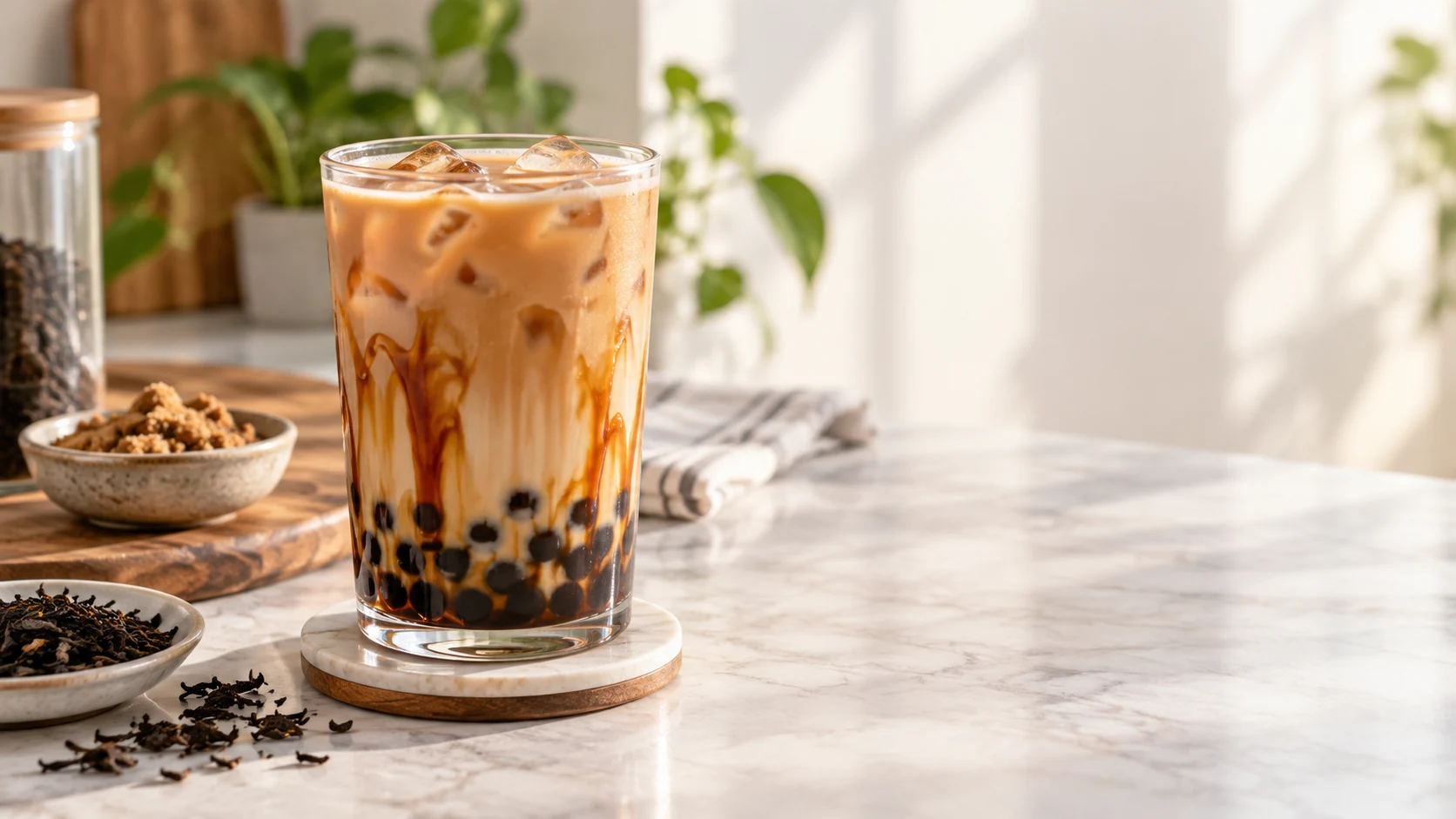
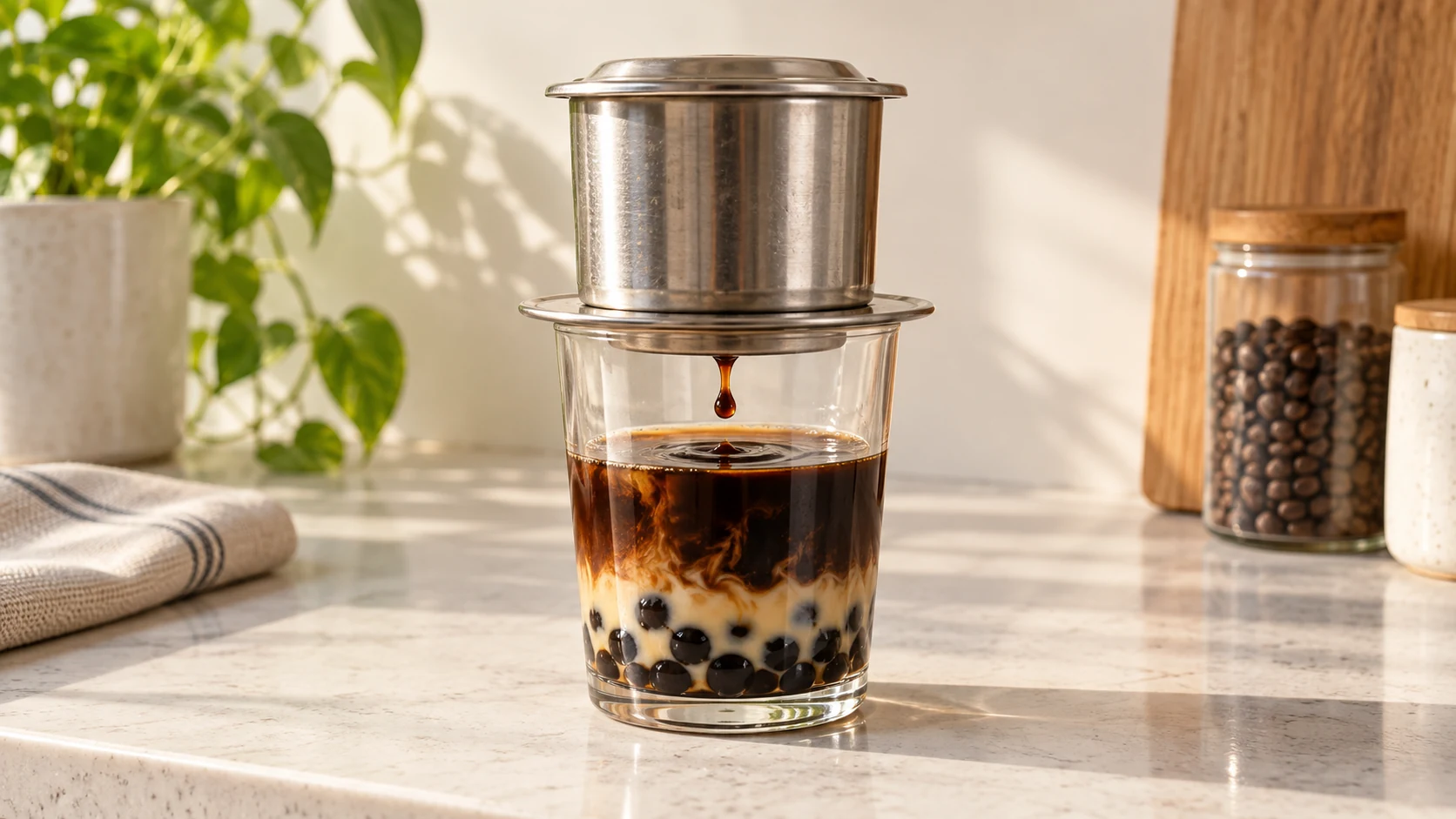
Vietnamese coffee boba works best when the coffee determines the rest of the drink. A phin produces a small, concentrated brew; condensed milk supplies both dairy and sugar; pearls introduce another sweet component; and ice creates dilution. Starting with a generic milk-tea formula and adding coffee to it can bury the very ingredient that defines the cup.
This source-based assembly has not been tested by Boba Bloom. Nguyen Coffee Supply's phin parameters provide the coffee starting point, while the exact pearl package controls topping preparation.
Plan one concentrated cup
For one approximately 16-ounce drink, prepare:
- 14 grams medium-fine Vietnamese coffee or another coffee suitable for a phin;
- 4 fluid ounces water at 195 to 200 degrees Fahrenheit;
- 1 to 2 tablespoons sweetened condensed milk;
- one serving cooked packaged pearls;
- 2 to 4 fluid ounces cold milk or an unsweetened plant beverage, optional;
- ice.
Nguyen Coffee Supply's traditional phin guide uses 14 grams of coffee with 4 ounces of water. It recommends a 1-ounce bloom for 45 seconds, then the remaining water, with the first drip arriving before 2 minutes and the brew completing around 5 minutes. Use those as diagnostic landmarks for that method, not universal guarantees for every phin and grind.
Set up the phin before the pearls
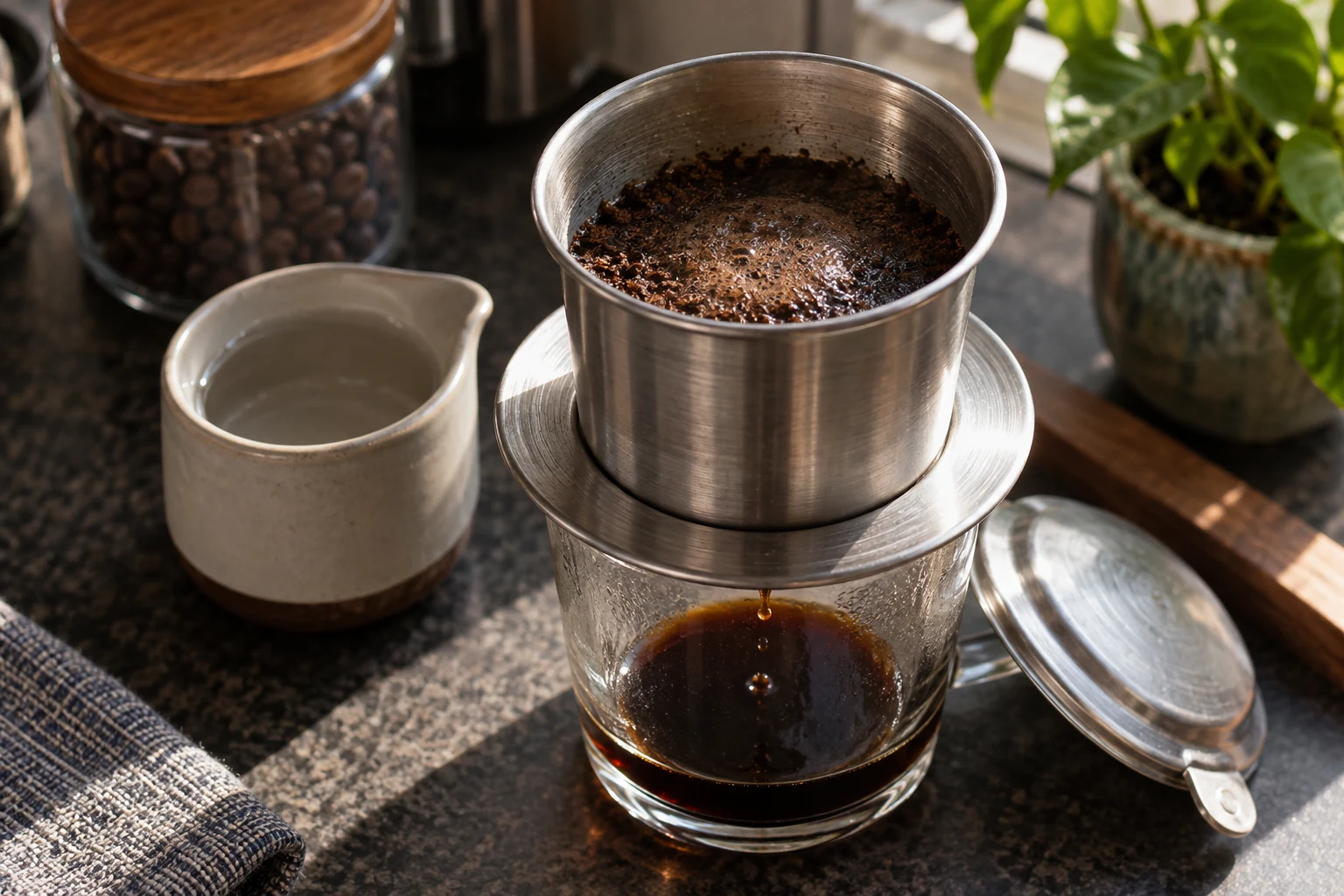
Preheat the phin and serving vessel with hot water, then discard that water. Add 14 grams of coffee and shake gently to level the bed. Place the filter press according to the phin maker's design; do not compact the grounds aggressively unless its instructions call for pressure.
Add 1 ounce of the heated water and let the coffee bloom for 45 seconds. Pour in the remaining 3 ounces, cover, and observe the drip. If no coffee appears by the expected window, the grind may be too fine or the filter too tight. If water rushes through, the grind may be too coarse or the bed uneven. Change one factor on the next brew.
Collect the full brew before judging strength. A phin is an extraction method, not simply a decorative filter sitting above the drink.
If your phin has a different capacity, preserve the maker's fill limits rather than forcing this water volume into it. Scale coffee and water together, collect the brew in a separate heat-safe vessel, and measure the amount that reaches the cup. Retained water and small equipment differences are useful observations for the next brew.
Make condensed milk an explicit decision
Begin with 1 tablespoon sweetened condensed milk in the receiving glass so the hot coffee can dissolve it. Stir after brewing and taste a cooled spoonful. Add the second tablespoon only if the coffee remains too intense for the intended cup.
Condensed milk is not interchangeable with plain milk plus an unspecified amount of sugar. It changes sweetness and body at the same time. If 2 tablespoons make the coffee too sweet, do not dilute automatically with a large volume of milk; first reduce the condensed milk in the next cup.
Eagle Brand Canada's current FAQ says opened condensed milk should be transferred to a glass or plastic container, refrigerated, and consumed within five days. Follow the label on your product if it is stricter. Condensed milk contains milk, so it is not suitable for a dairy-free drink.
Cook the pearls on their own schedule
Read the pearl package before starting the phin. A long-cook pearl may need to begin first; a quick product may be better started after the coffee has cooled. Bossen's Express Cook Big Tapioca uses 25 minutes of cooking and a 5-minute covered rest, while a separate Bossen method uses 30 minutes of cooking plus a 35-minute covered rest. Your bag controls the timing.
Once ready, drain or rinse only as directed. Use little or no extra syrup at first because condensed milk already supplies substantial sweetness. If the pearls need flavor, coat them lightly and count that sweetener as part of the finished cup.
Cool before building volume
Stir the brewed coffee and condensed milk until uniform, then cool the mixture. A clean container set in an ice bath can lower the temperature without adding water. Pouring hot coffee directly over the serving ice spends the cup's dilution before you have tasted the balance.
When cool, add 2 ounces of optional milk and taste. Add up to 2 more ounces only if the coffee still leads the drink. A plant-based beverage can work, but formulations vary; the FDA advises comparing labels because nutrient composition and added ingredients differ across products.
Assemble from dense to light
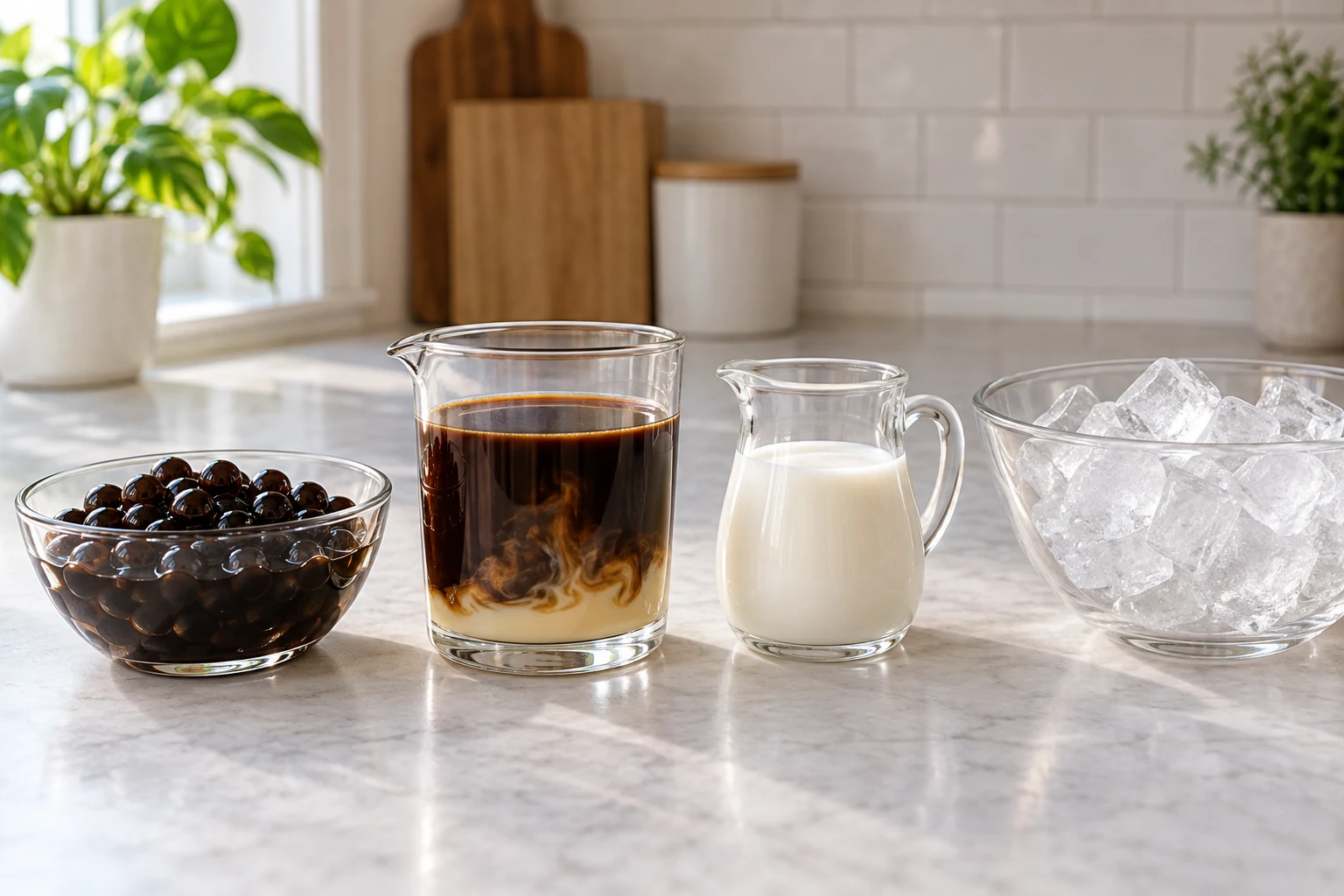
Place the prepared pearls in the bottom of the serving glass. Add the cooled coffee mixture and stir once so the pearls are not sitting in a layer of concentrated syrup. Add measured cold milk if using, then ice.
Taste after thorough stirring. The coffee should remain clearly identifiable, condensed milk should round it rather than dominate it, and the pearls should not create a separate candy-sweet zone. If the drink is too intense, add milk by the ounce. If it is too sweet, adding more coffee in the current cup helps only if unsweetened concentrate is already available; otherwise record a lower condensed-milk amount for next time.
Read the drip and the cup separately
If the brew is weak before assembly, solve the phin. Check dose, grind, filter placement, water temperature, and total drip time. Do not use more condensed milk as a coffee fix.
If the coffee is strong alone but vanishes in the cup, inspect the added milk, sweet pearl coating, and ice melt. If it tastes balanced but gritty, grounds may have passed through the filter or the grind may be unsuitable. If the drink becomes watery, cool the coffee and pearls more fully before adding ice.
Keep a short record of coffee dose, water, bloom, total drip time, condensed milk, added milk, pearl sweetener, and ice. That record reveals whether the next change belongs to extraction or assembly.
Handle leftovers as perishable
Serve cooked pearls within the maker's window and avoid saving an assembled iced drink for texture. Refrigerate opened condensed milk and other perishable components promptly. The FDA's general limit is two hours at room temperature, reduced to one hour above 90 degrees Fahrenheit, with refrigerator temperature at 40 degrees Fahrenheit or below.
Discard food with an uncertain time or temperature history. Appearance and smell alone cannot establish safety. A careful coffee recipe ends with the same discipline it begins with: measured inputs and a clear boundary.
Sources
- Traditional Vietnamese Drip Coffee: A Phin Guide Nguyen Coffee Supply
- Eagle Brand FAQs Eagle Brand Canada
- Express Cook Big Tapioca Bossen
- Tapioca Pearl Recipe - How to Make Boba Bossen
- Plant-Based Milk and Animal Food Alternatives U.S. Food and Drug Administration
- Are You Storing Food Safely? U.S. Food and Drug Administration