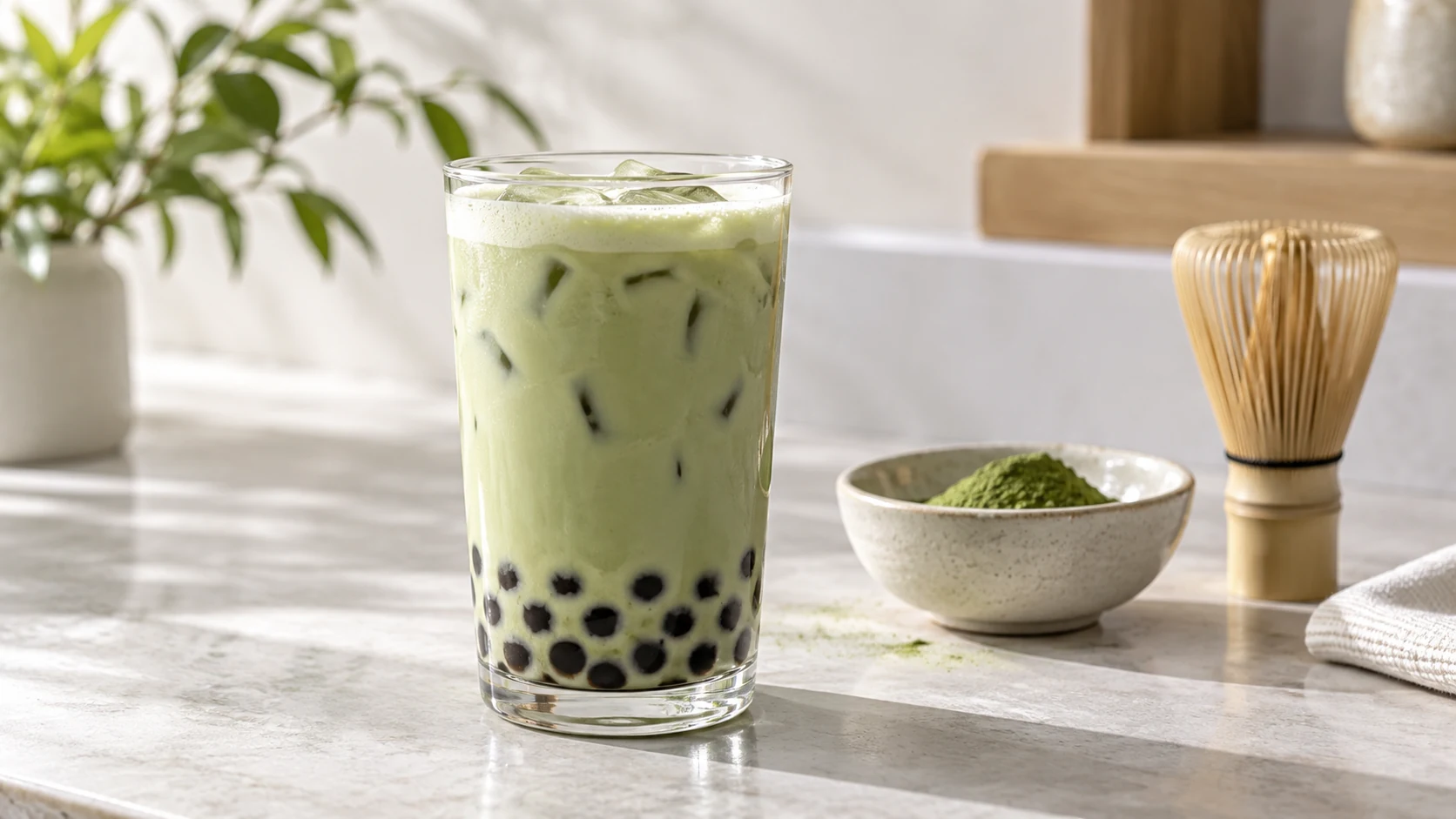
A matcha latte is not brewed like leaf tea. The powder remains in the drink, so the main task is dispersion: breaking up dry clumps, wetting the particles evenly, and combining the concentrate with milk before the serving ice causes rapid cooling. Pearls add a separate timing problem and must follow their own package.
This source-based method has not been tested by Boba Bloom. Its matcha sequence begins with Ippodo Tea's published latte method, then scales the assembly into one boba drink without claiming a guaranteed texture.
Start with a measured plan
For one approximately 16-ounce drink, prepare:
- 3 grams matcha;
- 3 fluid ounces, or about 90 milliliters, water at 176 degrees Fahrenheit or 80 degrees Celsius;
- 6 fluid ounces cold milk or a plant-based beverage;
- 1 to 2 tablespoons simple syrup, divided;
- one serving packaged tapioca pearls;
- ice.
Ippodo's matcha latte recipe uses 3 grams of matcha, 90 milliliters of 80-degree-Celsius water, and milk or soy milk. Keeping those first two measurements intact provides a traceable starting concentrate. The finished cup here uses less milk than Ippodo's hot latte so there is room for pearls and ice.
Let the pearl package set the timeline
Read the pearl directions before preparing matcha. Bossen's Express Cook Big Tapioca calls for 25 minutes of cooking and a 5-minute covered rest, while another Bossen large-pearl method uses 30 minutes of cooking plus 35 minutes covered. These examples show why the bag, not the general drink recipe, controls the clock.
For a long-cook pearl, begin it first and make matcha near the end. For a quick-cook pearl, prepare and cool the matcha concentrate before cooking the topping. Finish the pearls as directed and use them within the maker's stated window.
If the pearls are coated in sweet syrup, count that sweetness before adding the full syrup amount to the latte.
Sift before water touches the powder
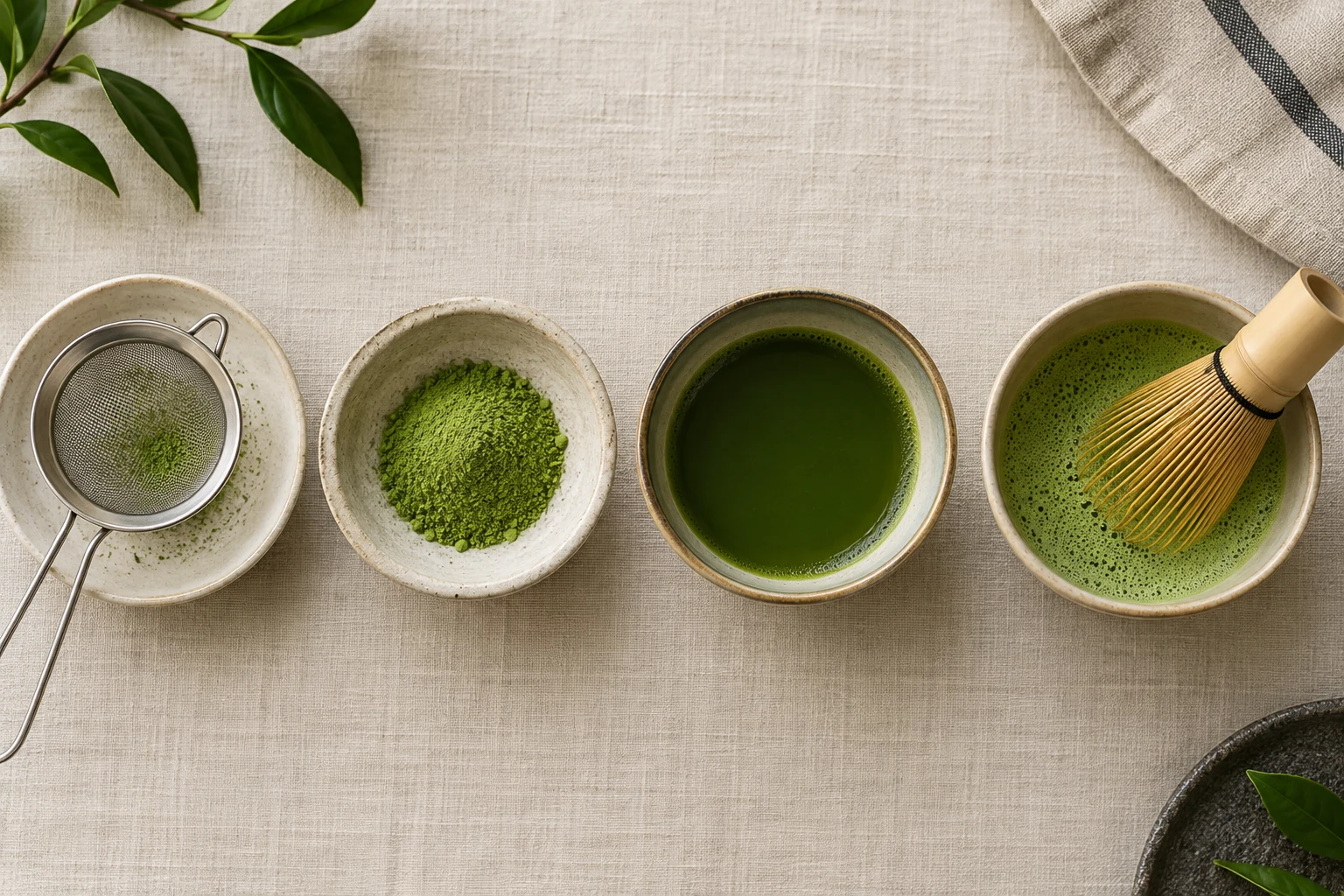
Pass 3 grams of matcha through a fine sieve into a wide bowl or cup. Press any remaining small clumps through with a dry spoon. Sifting is a physical preparation step; once a dry clump is surrounded by liquid, breaking its center becomes more difficult.
Heat fresh water and let it reach the target temperature. Water that is much hotter is not necessary for the cited method. Measure 90 milliliters and add it to the sifted matcha.
Whisk immediately for about 15 seconds, following Ippodo's timing. A bamboo whisk works, but a small handheld frother can disperse the powder if used in a vessel with enough room to prevent splashing. The aim is an even green liquid without visible dry islands. Foam is welcome but is not the only sign of successful dispersion.
Inspect the bottom and sides of the vessel before moving on. A smooth surface can hide a ring of dry powder below the liquid line. Sweep the whisk through those areas once, then lift it and check for intact clumps. Avoid scraping so hard that material from the whisk or vessel enters the drink.
Sweeten the concentrate, then cool it
Add 1 tablespoon simple syrup to the warm matcha and stir until uniform. Sweetening at this stage dissolves syrup easily and makes the remaining adjustment measurable. If your milk or pearls are sweetened, begin with less.
Cool the concentrate before it meets the serving ice. Set the vessel in an external ice bath and stir, taking care that bath water does not enter the matcha. Do not leave the whisked concentrate standing for a long period and then interpret settling as spoilage; matcha is a suspension and can need stirring again.
Give the cooled concentrate a brief whisk immediately before assembly.
Choose milk by label and purpose
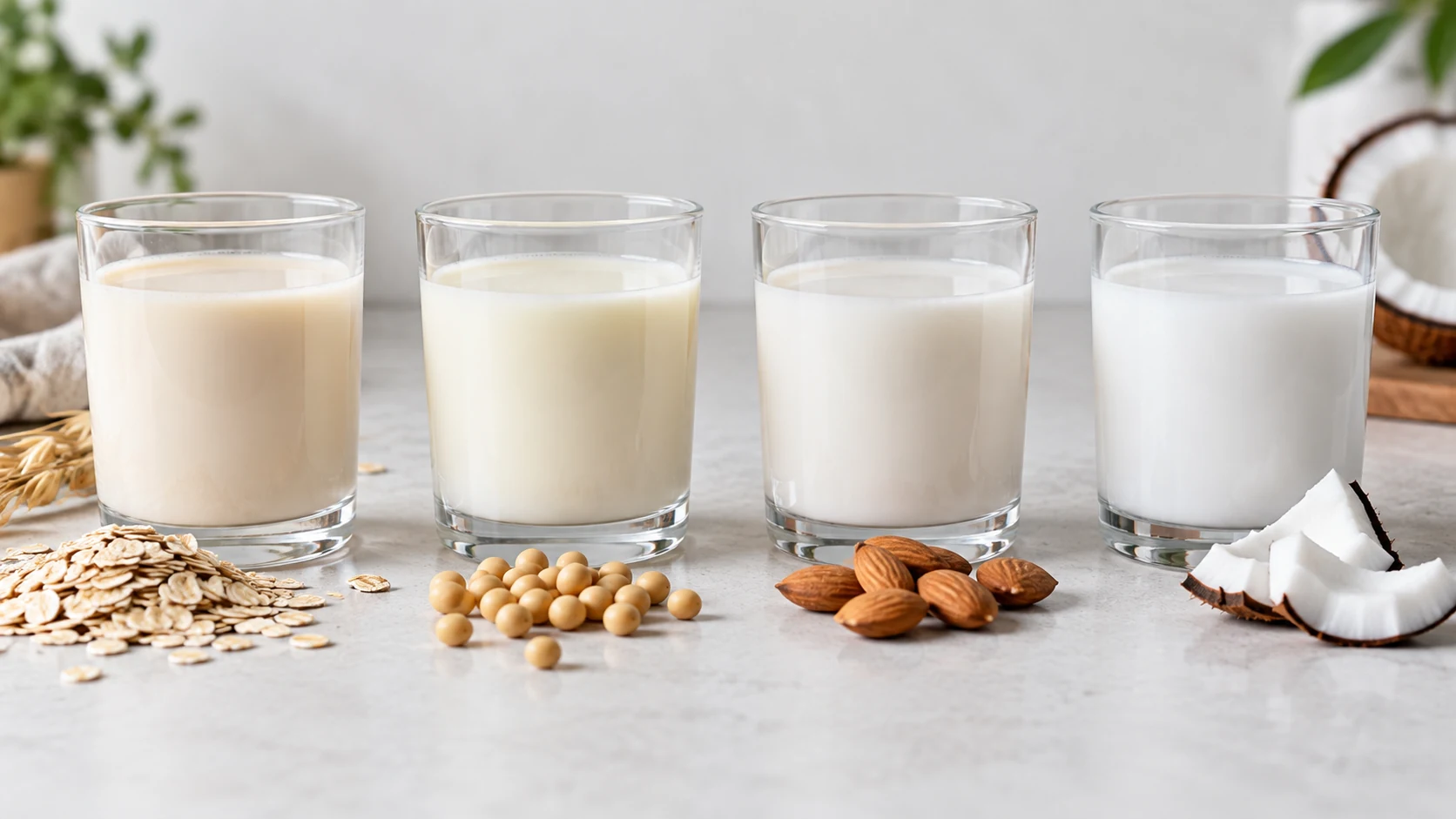
Plain dairy milk is one option, but oat, soy, almond, and coconut beverages are not one interchangeable category. The FDA notes that their composition depends on plant source, processing, and added ingredients. Compare the actual label for sugar, fat, protein, stabilizers, and allergens.
An unsweetened product makes the recipe's syrup easier to control. A sweetened “original” beverage may require no additional syrup. For food allergies, read the full label every time; the FDA identifies milk, soy, tree nuts, and sesame among the major allergens requiring attention in the United States.
Test a new milk in a small matcha portion if you are unsure about flavor or appearance. A visual layer does not automatically mean the product is unsafe, but a product with an uncertain storage history should not be rescued by whisking.
Assemble in four phases
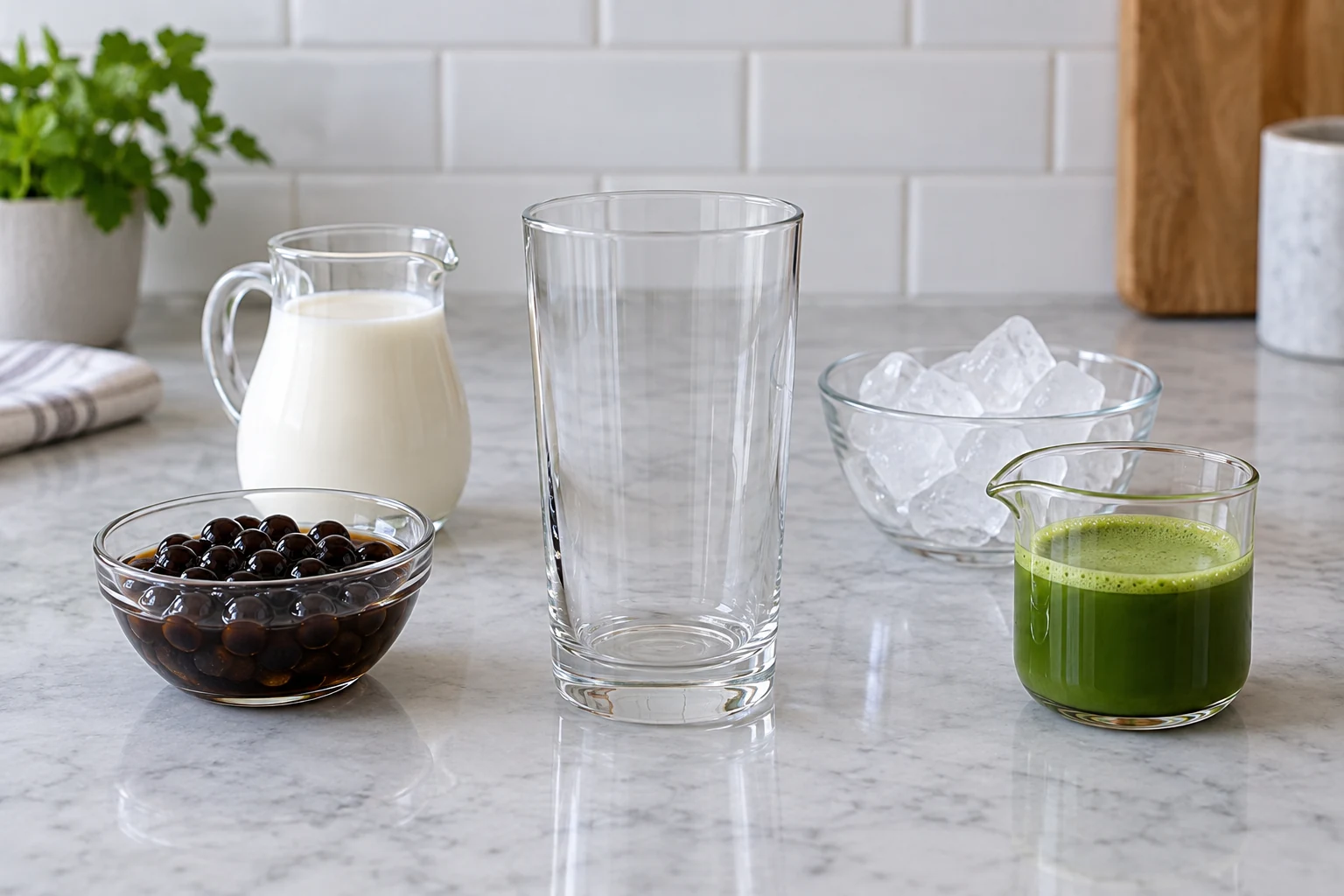
Add the prepared pearls to the serving glass. Pour in the cold milk and any small amount of pearl syrup. Add ice, leaving enough room for the matcha. Whisk the cooled concentrate briefly, then pour it over the milk.
For a layered appearance, serve immediately and tell the drinker to stir before judging sweetness. For a consistent first sip, stir thoroughly before serving. Add the remaining simple syrup by the teaspoon only after the full drink has been mixed and tasted.
The matcha should remain distinct after milk and ice. If it disappears, reduce milk slightly or increase matcha only in a future measured batch. Adding dry powder directly to the assembled cup is likely to produce clumps.
Diagnose clumps, settling, and thin flavor
Dry green specks: sift the powder and whisk it with warm water before adding milk.
A dense layer forms quickly: re-whisk the concentrate and stir the finished drink. Also verify that the powder was measured and fully wetted.
Matcha tastes thin: reduce total milk or ice first. If needed next time, adjust matcha in a measured increment while preserving enough water to whisk it.
Drink is sweet but matcha seems harsh: do not keep adding syrup. Check water temperature, powder quantity, and matcha freshness.
Pearls become hard while the latte waits: reverse the timeline. Prepare and chill the matcha before finishing a quick-cook pearl.
Finish with a reproducible note
Record the matcha weight, water temperature, whisk time, milk product and amount, syrup, pearl product, and ice. Especially note whether the milk and pearls were already sweetened. Without that information, “one tablespoon of syrup” does not describe the true sweetness of the drink.
Refrigerate milk and other perishable ingredients according to their labels. Serve cooked pearls within the maker's window and discard components with uncertain time or temperature history. The objective is a controlled suspension assembled at the right moment, not a drink held indefinitely for appearance.
Sources
- Matcha Latte Ippodo Tea
- Plant-Based Milk and Animal Food Alternatives U.S. Food and Drug Administration
- Food Allergies U.S. Food and Drug Administration
- Express Cook Big Tapioca Bossen
- Tapioca Pearl Recipe - How to Make Boba Bossen