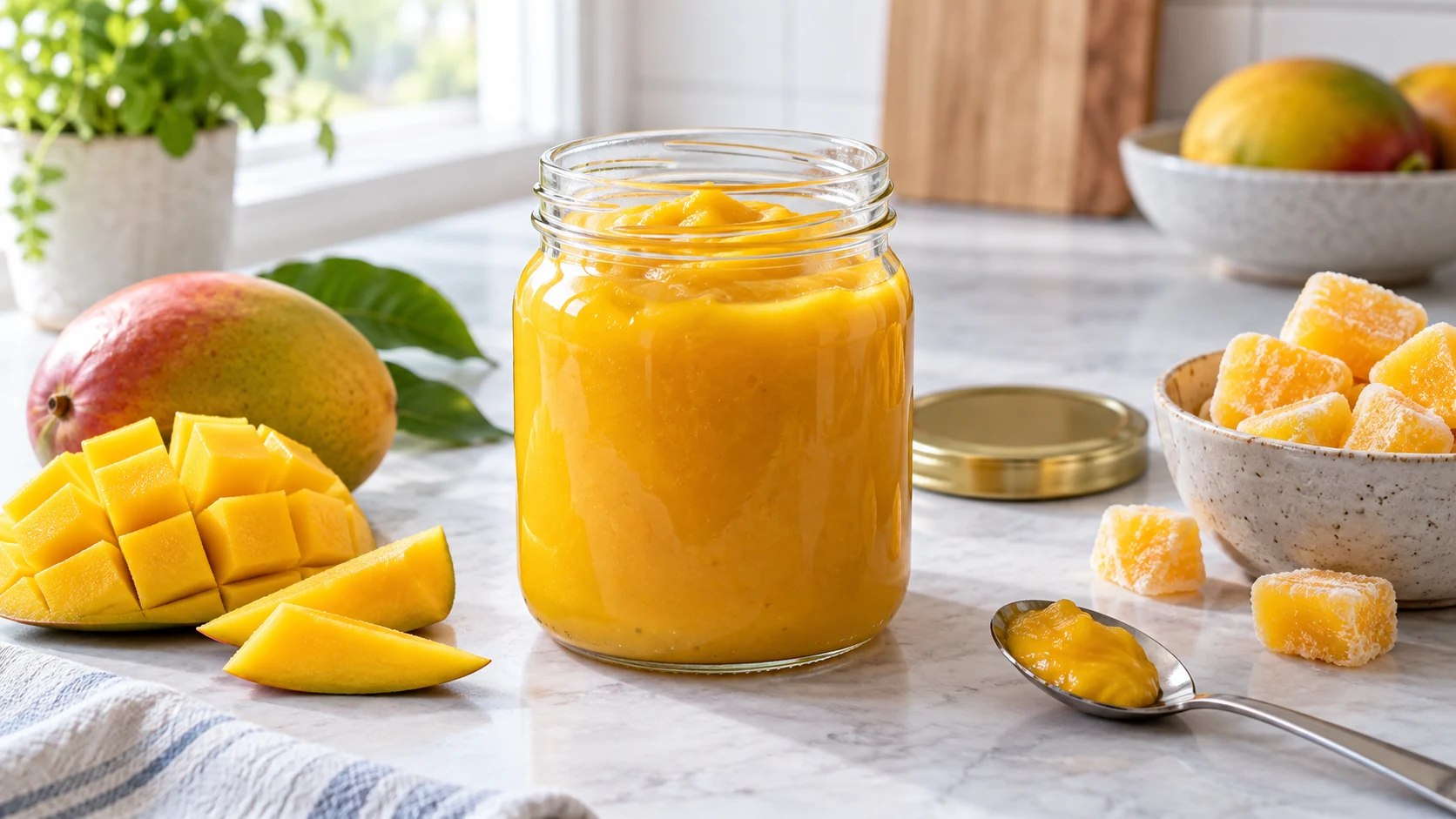
Mango puree for drinks is a component, not one fixed recipe. A thin puree can disappear into tea, a spoonable puree can form a fruit layer, and a fibrous puree may need straining for a wide straw. Define the intended texture before adding water or sugar, then label the result so the finished drink knows what it is receiving.
This source-based method has not been tested by Boba Bloom. It does not claim a home-validated refrigerator shelf life. Make a small batch, refrigerate it promptly, and freeze surplus rather than treating fresh puree as shelf-stable.
Choose fresh or frozen for the job
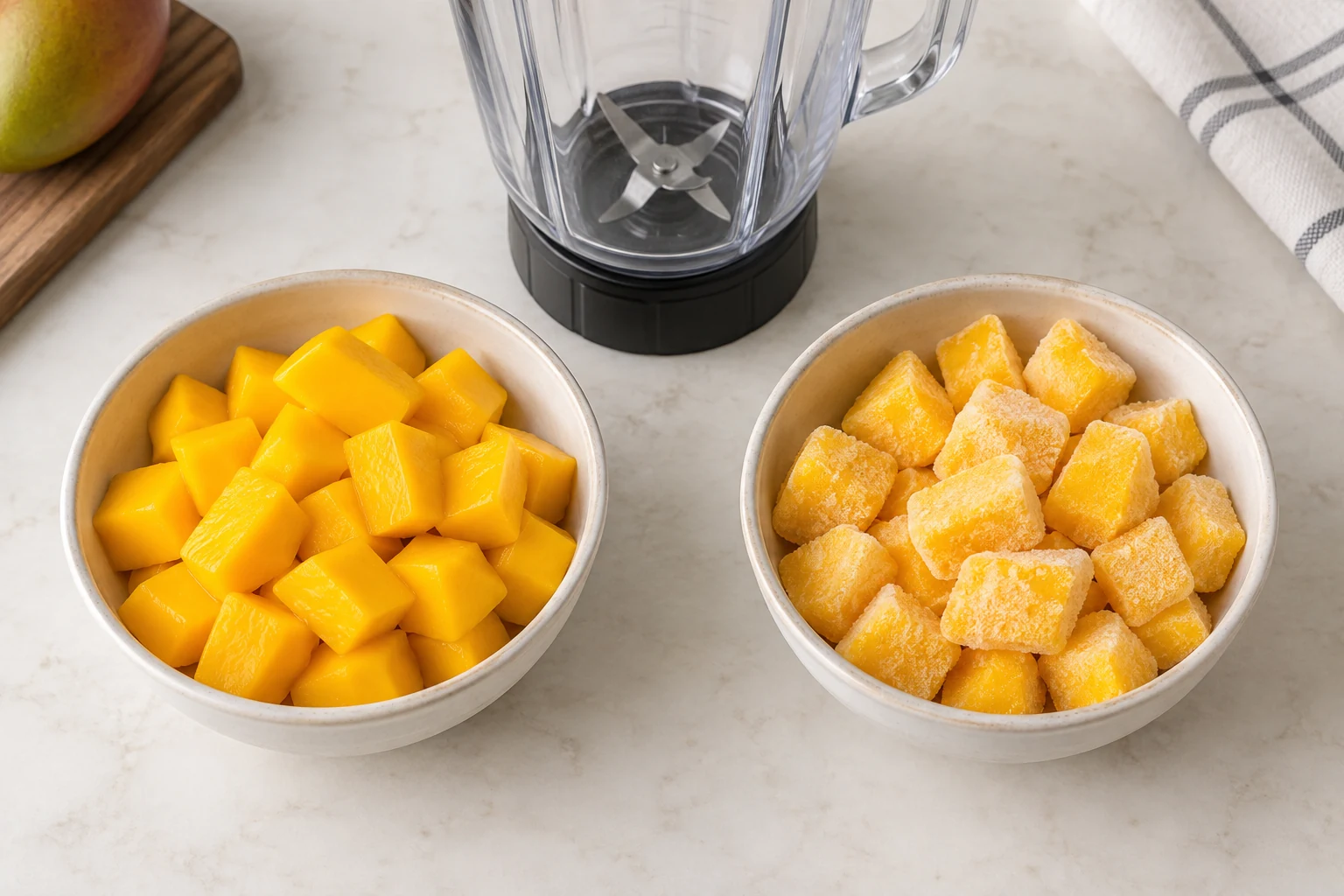
Fresh mango gives you direct control over ripeness and trimming. Choose fruit without broken skin, mold, leaking areas, or extensive damage. Pennsylvania State University Extension's storage guidance places whole mango among fruits that can ripen at room temperature for roughly three to five days and advises refrigerating ripe mango. Fruit condition still controls the decision; a calendar does not rescue damaged produce.
Frozen mango offers consistent pieces and reduces peeling work. Read the ingredient list to confirm whether sugar or syrup has been added. Thaw only the amount needed in the refrigerator or as the package directs, and include released juice in the puree before judging thickness.
Neither choice is automatically superior. Fresh is useful when you can select and use ripe fruit promptly. Frozen is useful for small repeatable batches when good fresh mango is unavailable.
Wash, peel, cut, and chill safely
Wash hands with soap and water before and after preparation. Clean the knife, board, blender, lid, and storage container. The FDA advises rinsing whole produce thoroughly under running water and not using soap or commercial produce wash. Wash the mango before peeling, because the knife passes from the exterior toward the flesh.
Cut away damaged or bruised areas. Peel the fruit, remove the flesh from the pit, and cut it into pieces that the blender can process evenly. Keep cut fruit separate from raw meat, seafood, eggs, and unwashed tools.
If preparation pauses, refrigerate the cut fruit. Do not leave it on the counter while other drink components are made.
Blend toward a defined texture
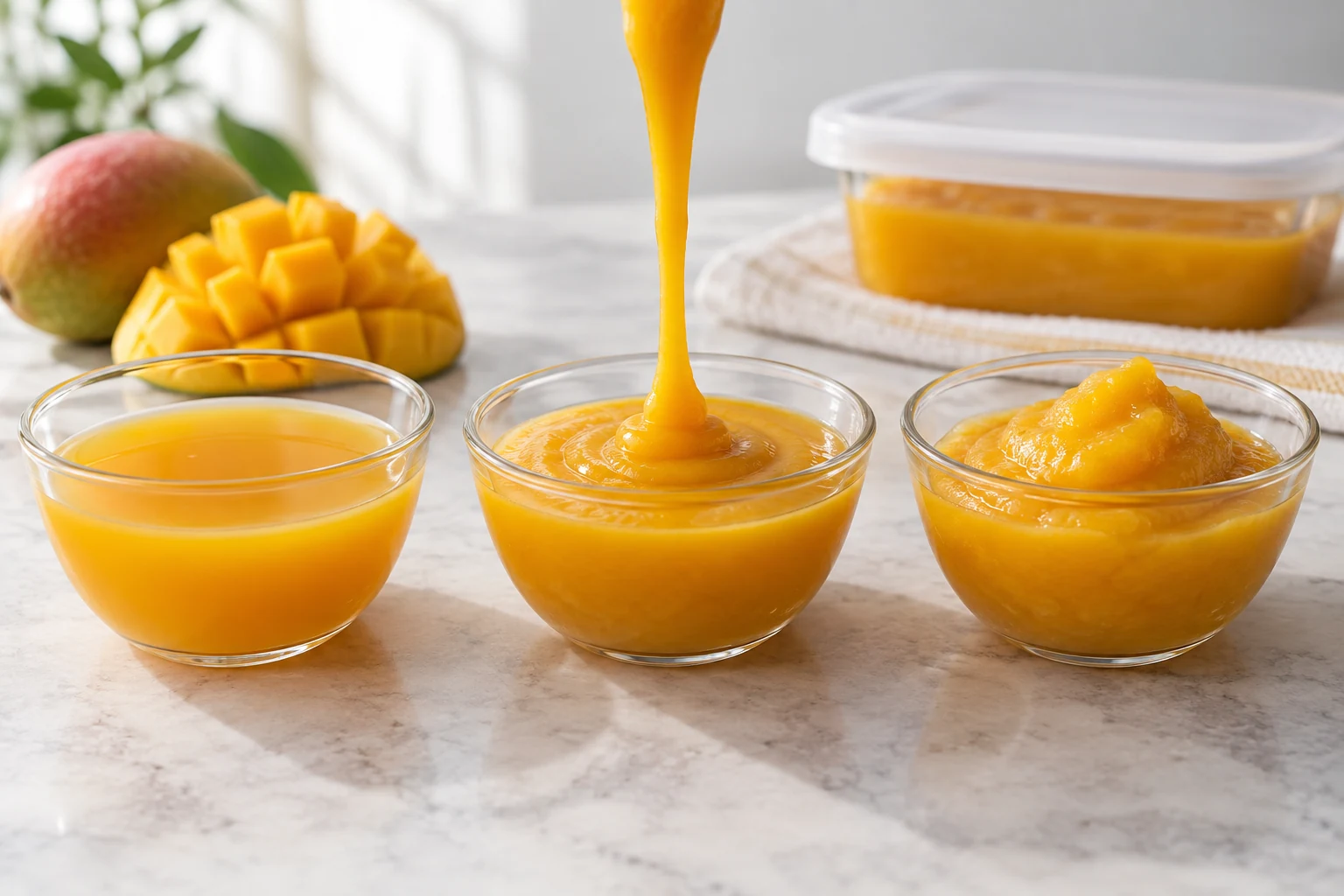
Begin with 1 cup mango pieces and no added water. Blend in short pulses, stop, scrape the container, and continue until no large pieces remain. Starting dry preserves options; water added at the beginning cannot be removed without cooking or adding more fruit.
Choose one of three endpoints:
- Spoonable: the puree mounds briefly on a spoon and works as a fruit layer or a thicker latte component.
- Pourable: the puree falls in a slow continuous ribbon and mixes into tea with stirring.
- Thin: the puree pours like nectar and contributes a meaningful amount of liquid to the final cup.
For a pourable puree, add cold water or released mango juice 1 teaspoon at a time, blending after each addition. For a thin puree, continue in measured teaspoons and record the total. Do not use sugar syrup as the first thinning liquid, because it changes texture and sweetness simultaneously.
Penn State Extension's fruit-freezing guidance includes pureeing fruit in a blender as one preparation option and emphasizes clean equipment, small batches, and rapid freezing. That supports the handling approach, but it does not establish a fresh refrigerator life for this exact drink puree.
Decide whether to strain
Press a spoonful through a fine-mesh strainer and compare it with the unstrained puree. Straining removes some fiber and can make a lighter mango green tea easier to drink through a straw. It also reduces yield and body.
Leave the puree unstrained for a thicker fruit layer or a smoothie-like drink. Strain it for a cleaner tea texture, especially when the fruit is visibly fibrous. Record whether the measured yield is before or after straining so later recipes do not silently receive less mango.
Do not force every solid through the mesh. If the remaining fiber is dry and resistant, pressing harder may defeat the purpose of straining.
Adjust sweetness and acidity separately
Taste the finished texture before adding anything. If the mango is ripe and sweet enough, leave it unsweetened; this gives the final drink full control. If it needs sweetness, add simple syrup 1 teaspoon at a time, blending and recording each addition.
If the puree tastes sweet but dull, a very small measured amount of lemon or lime juice can change the balance. Begin with 1/4 teaspoon per cup of puree. Citrus is a flavor adjustment, not a home preservation process, and this guide does not claim that it makes fresh puree shelf-stable.
If the mango tastes underripe or unpleasant, do not keep adding sugar in an attempt to manufacture ripeness. Choose better fruit or use a clearly labeled frozen product in the next batch.
Store conservatively and label the batch
Transfer the puree to a clean covered container immediately. Label it with the preparation date and time, whether it is sweetened, whether citrus or water was added, and whether it was strained. Refrigerate promptly at 40 degrees Fahrenheit, or 4 degrees Celsius, or below.
The FDA advises a two-hour room-temperature limit for foods requiring refrigeration, shortened to one hour when the temperature is above 90 degrees Fahrenheit. It also warns that foods can cause illness even when they do not look or smell spoiled. Discard puree with an uncertain handling history rather than tasting it to decide.
Because the reviewed sources do not supply a validated refrigerator shelf life for this exact uncooked puree, make only what will be used promptly. Freeze extra in small clean containers or trays, leaving appropriate expansion space and following freezer guidance. Rapid freezing in small batches preserves flexibility: thaw only what a drink needs.
Hand the component to the drink
Before using the puree, stir it and write down four facts for the drink recipe: total yield, tablespoons used, sweetness status, and texture class. A mango green tea may begin with 3 tablespoons of pourable unsweetened puree, while a thicker drink may need less.
Count any added water as part of the drink's liquid and any added syrup as part of its sweetness. If the puree separates during refrigeration, stirring may restore a uniform texture, but separation does not override time, temperature, or spoilage concerns. The best component record is short, measurable, and honest about what has not been established.
Sources
- Selecting and Serving Produce Safely U.S. Food and Drug Administration
- Are You Storing Food Safely? U.S. Food and Drug Administration
- Farmers Market Storage Postcard Penn State Extension
- Let's Preserve: Freezing Fruits Penn State Extension