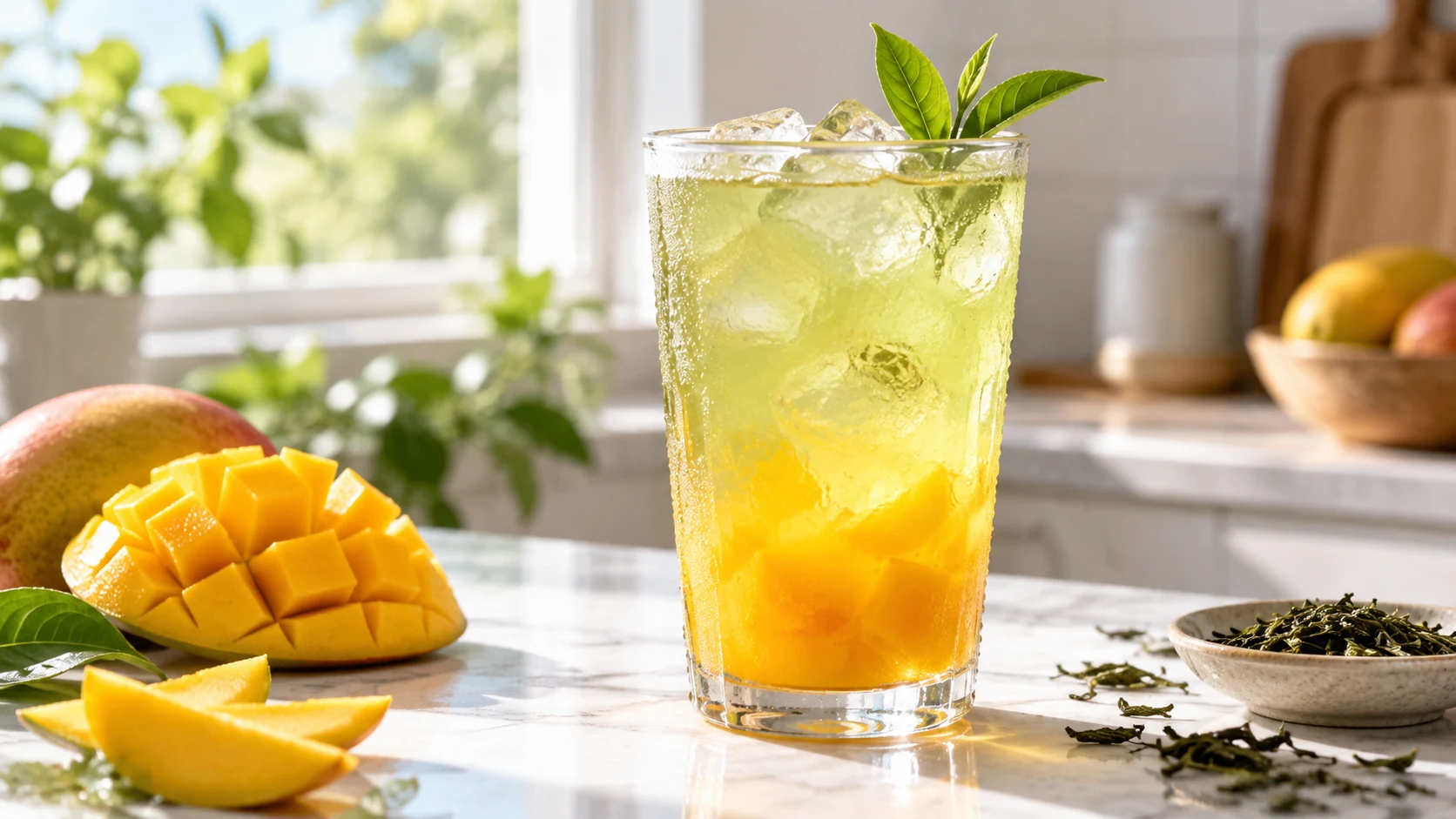
Mango green tea has two variable ingredients before sweetener or ice is considered. Green tea can be delicate or assertive, while mango can be tart, floral, fibrous, thick, or already sweetened. A fixed sugar number cannot correct every pairing. The repeatable method is to calibrate the tea and mango separately, then combine measured portions.
This source-based recipe has not been tested by Boba Bloom. It uses a measured starting formula and observable adjustments rather than promising the same result from every mango or tea.
Set the two inputs
For one approximately 16-ounce drink, begin with:
- 8 fluid ounces brewed green tea;
- 3 tablespoons unsweetened mango puree;
- 1 tablespoon simple syrup, optional and divided;
- 1 teaspoon lemon or lime juice, optional;
- ice;
- one serving of a separately prepared topping, optional.
Confirm whether the puree is sweetened. A commercial puree, nectar, or canned pulp may already contain sugar and may be much thinner than freshly blended fruit. Record the product and measure by volume so the next cup can be compared honestly.
Brew green tea for a cold drink
Twinings' current general guidance places green tea around 175 to 180 degrees Fahrenheit with a steep of about 2 minutes. The exact tea package takes priority. Measure the water temperature and remove all tea when the steep ends; leaving leaves in the cooling liquid changes the extraction.
Taste the tea plain. It should be clean and more noticeable than a finished iced tea, because mango and ice will soften its presence. If it is bitter before fruit is added, brewing hotter or longer is unlikely to help. Verify the temperature, shorten the steep, or use more tea material at the same water volume on the next attempt.
Tea bags and loose leaves can deliver different amounts of tea even when both are described as one serving. Record grams when the package provides them. If you switch products, return to the new label's starting point rather than carrying over a correction from the old tea. That keeps a mango adjustment from being confused with a tea-product change.
Use a clean thermometer if the kettle does not display temperature; guessing by bubbles makes comparison less reliable.
Cool the strained tea in a covered clean container. An external ice bath chills it without adding unmeasured meltwater.
Define the mango before mixing
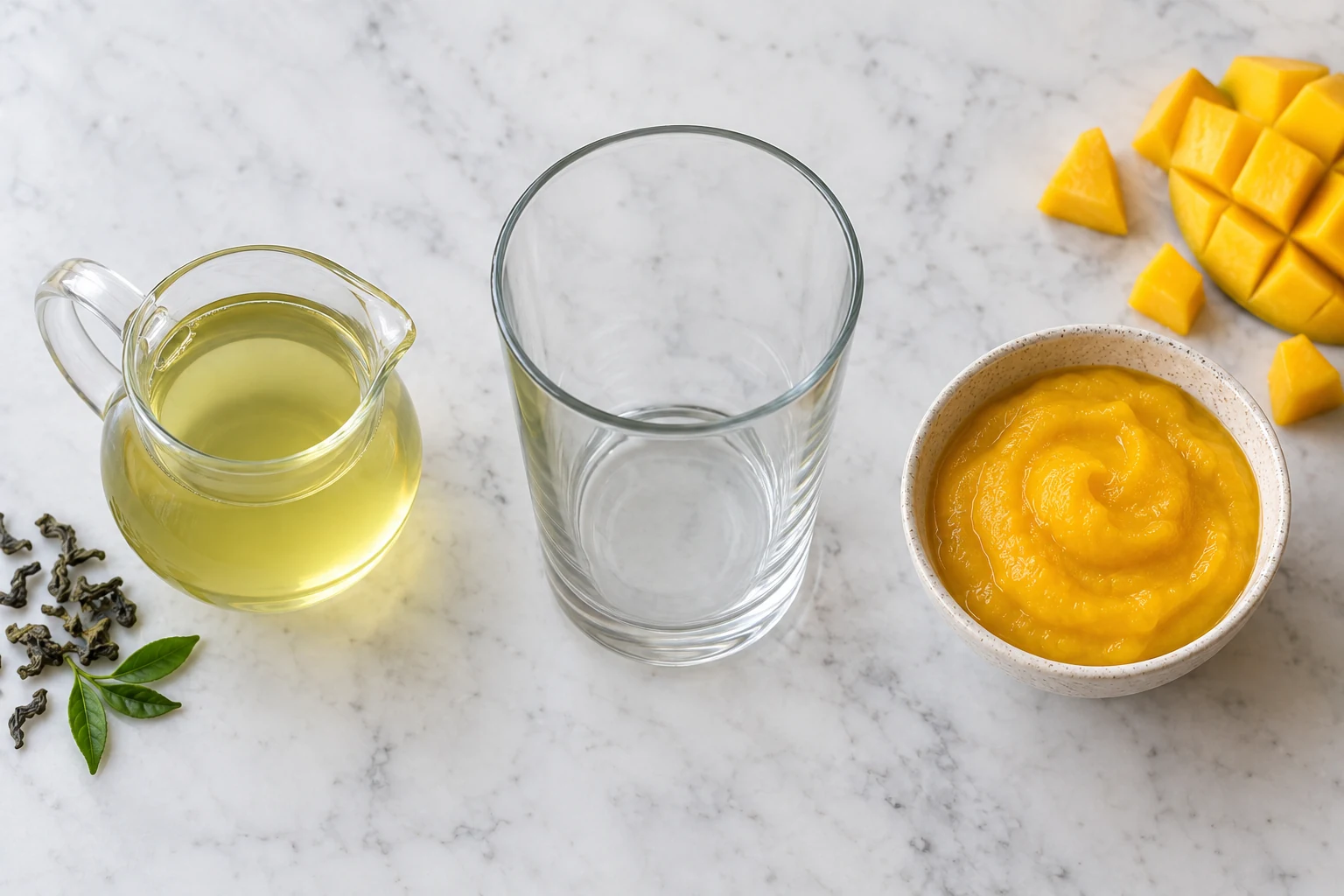
Stir prepared puree before measuring. Spoon 3 tablespoons into a small cup and note three things: sweetness, tartness, and flow. A thick puree may need a small amount of tea to become pourable; a nectar-like product may already bring enough liquid that the tea quantity should be reduced.
Fresh mango must be handled as fresh produce. The FDA advises washing hands and utensils, rinsing produce under running water rather than with soap, removing damaged areas, and refrigerating cut fruit. Wash a whole mango before peeling so the knife does not carry surface material into the flesh.
Do not taste fruit with an uncertain storage history. Color and aroma are quality clues, not reliable proof of safety.
Combine without hiding either input
Whisk the mango puree with 2 ounces of the cooled tea until smooth, then stir that mixture into the remaining tea. This staged mixing is easier than chasing puree clumps around a glass already filled with ice.
Taste before adding syrup. If mango is clearly present and the green tea remains identifiable, the base is ready. If the fruit dominates, add cooled tea by the ounce. If the tea dominates, add puree by the teaspoon. These small steps keep the drink inside a known range.
Only after the tea-fruit balance is clear should sweetness be adjusted. Add simple syrup by the teaspoon, stirring and tasting each time. If the drink tastes heavy or dull rather than simply unsweet, a teaspoon of citrus may sharpen it, but this is optional and should also be added incrementally.
Decide whether to strain
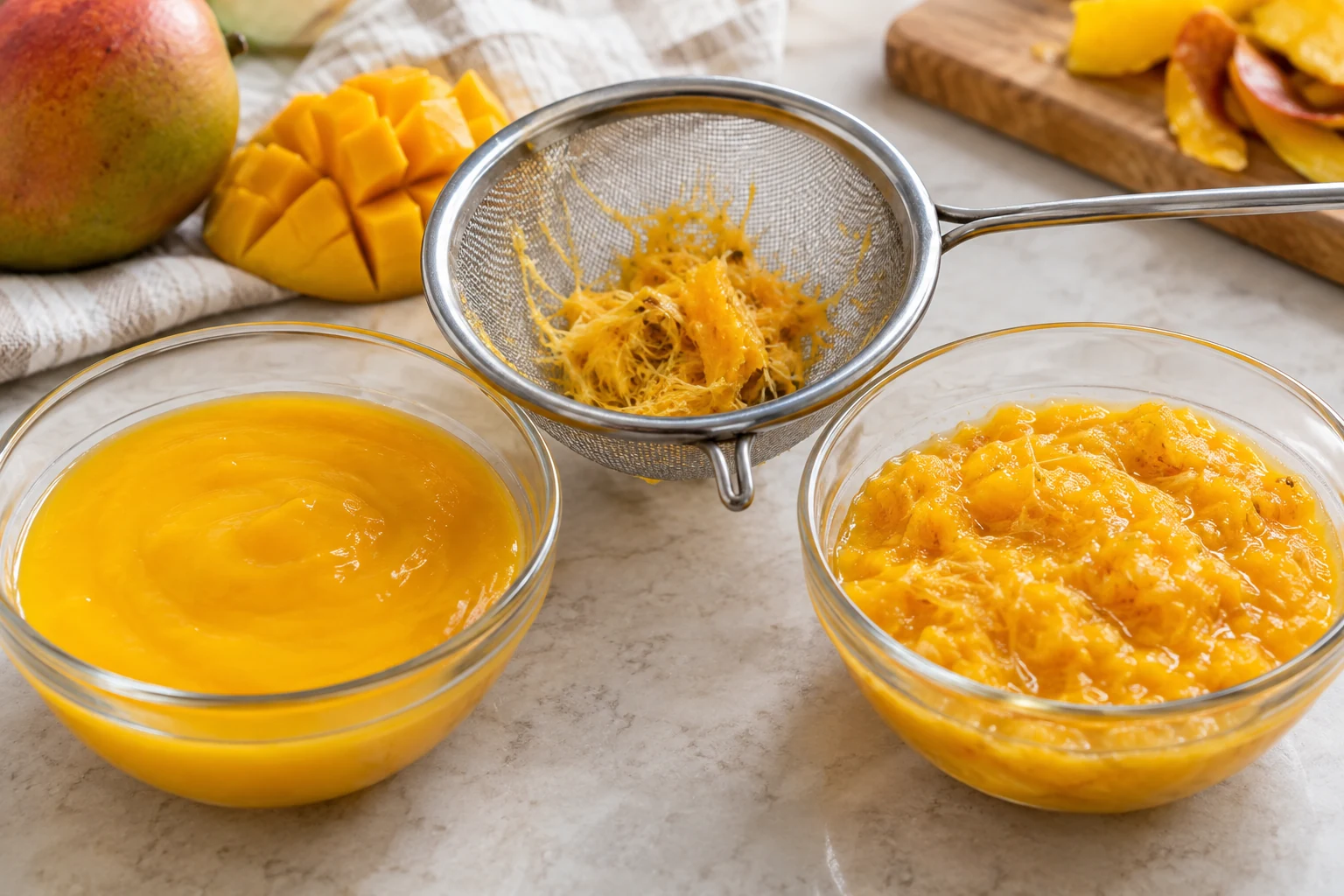
Straining is a texture decision, not a quality requirement. A fibrous puree can make a wide straw feel blocked or leave a thick layer near the bottom. Pressing the puree through a fine-mesh strainer creates a lighter fruit-tea texture. Leaving it unstrained preserves more body and visible fruit.
Choose before measuring the final amount because straining changes yield. Note whether your 3 tablespoons refer to puree before or after straining. For a clear, refreshing green tea, use the strained quantity. For a smoothie-like cup, keep the pulp but expect to stir during drinking.
Add ice as a measured ingredient
Pour the balanced mango-tea base over a measured cup of ice or add enough to chill without overflowing. If the base is still warm, do not rely on a full glass of ice to cool it; the resulting melt can erase both tea and fruit definition.
If using pearls or jelly, add the prepared topping first and reduce other sweetener if the topping is coated in syrup. This article does not assign a universal cooking time to pearls; follow the exact package.
Taste again after the drink is cold. Perceived balance can shift with temperature and dilution. Record whether the next version needs stronger tea, more mango, less syrup, or less ice, but choose only one primary change.
Troubleshoot the pairing
Bitter and fruity: the tea was likely flawed before assembly. Rebrew rather than covering it with more mango and sugar.
Sweet but flat: stop adding syrup. Try a small measured citrus addition, or use a less-sweet puree next time.
Mango sits at the bottom: whisk puree with a small tea portion before combining and stir the drink before serving.
Tea disappears: reduce puree or brew a stronger base with more tea material, not an uncontrolled longer steep.
Watery after five minutes: cool all components first and reduce ice melt. If the puree itself is thin, count it as liquid in the formula.
Keep the component record
Write down the tea, brew temperature and time, puree type, whether it was strained, syrup, citrus, and ice. A reusable mango puree should also carry a preparation date and sweetness note so a later drink does not assume it is neutral.
Refrigerate cut fruit, puree, and finished drinks promptly. The FDA advises a two-hour room-temperature limit for foods requiring refrigeration, shortened to one hour above 90 degrees Fahrenheit, and a refrigerator temperature of 40 degrees Fahrenheit or below. Make small batches and freeze surplus puree rather than treating fresh mango as shelf-stable.
Sources
- How to Make the Perfect Cup of Loose Leaf Tea Twinings
- Selecting and Serving Produce Safely U.S. Food and Drug Administration
- Are You Storing Food Safely? U.S. Food and Drug Administration
- Let's Preserve: Freezing Fruits Penn State Extension