When a bubble tea goes wrong, adding more sugar, milk, or ice at random often creates a second problem. Diagnose the failed component first. Taste the tea separately if possible, cut one pearl open, and note whether the drink was assembled while any component was still hot. Then decide whether the current cup can be improved or whether the lesson belongs to the next batch.
This is a symptom guide, not a replacement for the directions on a tea or pearl package. Manufacturers use materially different methods, so the exact product remains the controlling source.
Pearls have a hard center
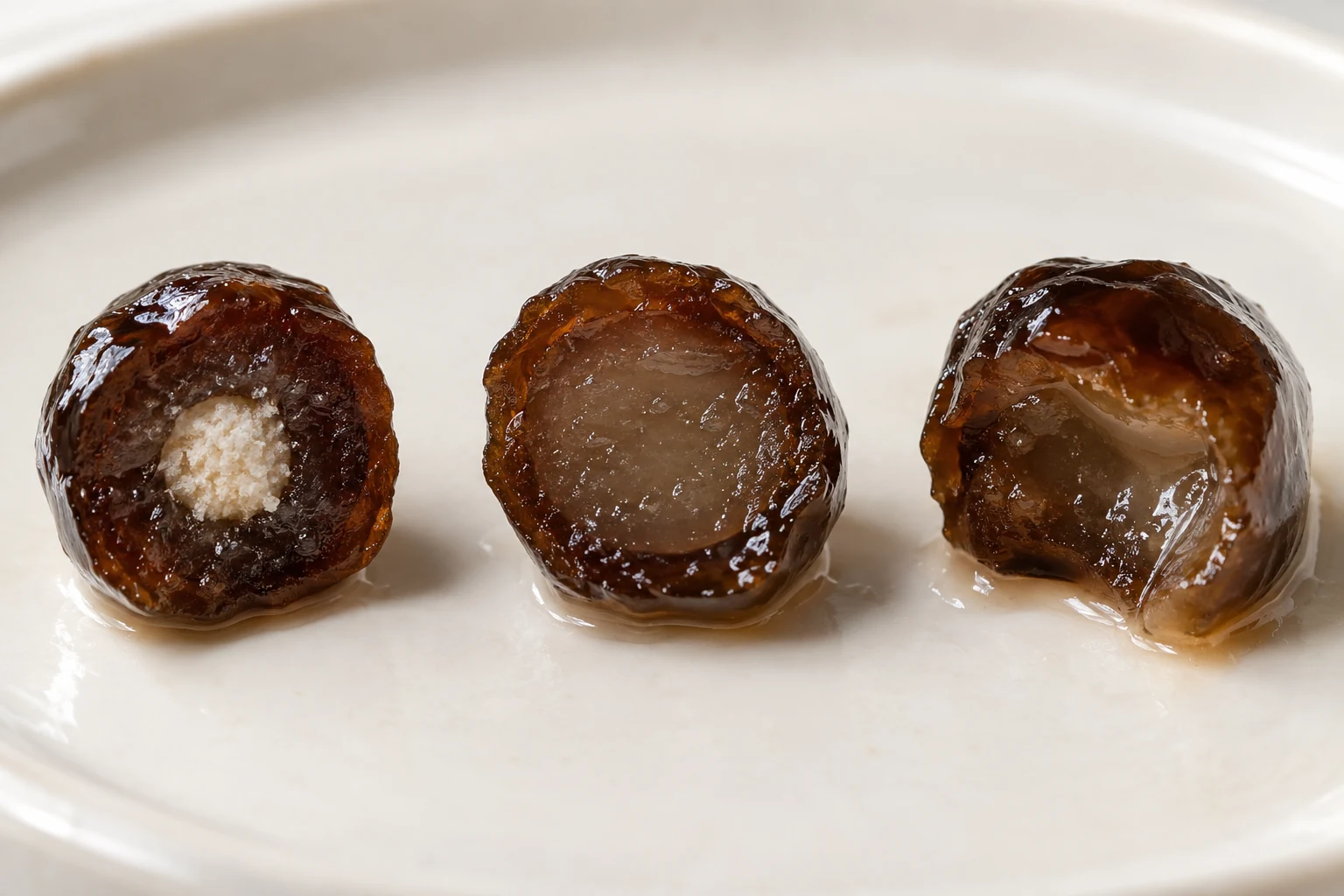
Cut a pearl in half. A firm or chalky center usually points to incomplete cooking or resting for that specific product. Check the package before returning the pearls to heat. Bossen's Express Cook Big Tapioca, for example, specifies a 25-minute cook followed by a 5-minute covered rest. A separate Bossen method for another large-pearl product specifies 30 minutes of cooking and a 35-minute covered rest. Applying the first timing to the second product would end the process much too early.
If the package method is still in progress and the pearls are merely underdone, continue that method and check again at its stated endpoint. If the pearls have already been mixed into a cold drink, reheating the whole cup is not a useful repair. Remove the pearls if practical and treat the next batch as a timing correction.
A hard center can also result from water that stopped boiling after too many pearls were added. Use the product's water ratio, a pot large enough for circulation, and the heat level its instructions require.
Pearls are mushy, swollen, or clumped
Mushy edges with no pleasant chew suggest overcooking, an excessive hold, or a mismatch between the product and the method. More cooking will not restore structure. For the next batch, verify the exact pearl type and shorten only the phase that exceeded its directions.
Clumping needs a different diagnosis. Pearls may crowd together when the water volume is too low or when they are not stirred at the stage specified by the maker. After cooking, they can also stick while sitting without a compatible finishing syrup. Gently separating a warm, freshly cooked batch may help; aggressively stirring a soft batch can break it down further.
Do not treat all holding advice as universal. Bossen tells users to consume both of its cited cooked products within four hours, but that statement belongs to those named products. Follow the shorter instruction on your own package.
Tea tastes weak, bitter, or hollow
Taste a little tea without pearls or milk. If it is already weak, the base lacked concentration; adding syrup will make it sweeter, not stronger. Next time, increase the measured tea amount while keeping the producer's temperature and steep time stable.
If the plain tea is bitter, check the water temperature, steep duration, and whether the leaves remained in the liquid while it cooled. Twinings currently suggests black tea near boiling for 3 to 5 minutes, green tea around 175 to 180 degrees Fahrenheit for about 2 minutes, and oolong around 195 degrees Fahrenheit for 2 to 3 minutes. These are starts for those tea families, not permission to ignore the package.
“Hollow” tea can mean the aroma is present but the finished drink contains too little tea relative to milk, fruit, or ice. Reducing one diluting component in the current cup may make the balance clearer. For a repeatable correction, plan the finished volume before brewing.
The cup turns watery

Look for water entering in three places: weak tea, melting ice, and watery fruit. A warm tea base or warm pearls can melt a large amount of ice before the drink reaches the table. Adding more ice keeps the cup cold but adds still more dilution.
For the current cup, remove unmelted ice and taste again. A small addition of cooled, concentrated tea can help if one is already available. Do not pour hot concentrate into a cold dairy or plant-based drink and call the problem solved; it may melt more ice and change the texture.
For the next batch, cool the tea and cooked topping before assembly, measure the liquid components, and choose either chilled tea or a deliberately calculated flash-chill method. If fruit puree releases water while standing, stir it before measuring and note its consistency.
Milk separates or matcha settles
Visible separation is a texture symptom, not proof by itself that a drink is spoiled. Acidic fruit can destabilize some dairy or plant-based beverages, while a plant beverage's formulation can affect its behavior. The FDA notes that plant-based beverage composition varies with the source plant, processing, and added ingredients. Check the carton label and avoid assuming that two products with the same front-of-pack category will act alike.
For fruit-and-milk separation, stop adding ingredients and check whether the recipe intentionally combines them. A fruit tea may be better without milk. For the next batch, test a spoonful of fruit with a spoonful of the chosen milk before committing the whole drink.
Matcha sediment points first to dispersion. Ippodo's matcha latte method sifts the powder, combines it with 80-degree-Celsius water, and whisks for 15 seconds before adding milk. If dry powder went directly into cold milk, vigorous stirring after assembly may reduce clumps, but rebuilding the sequence next time is more reliable.
Save this cup or stop
A cup is a candidate for a small adjustment when its ingredients were handled safely and the problem is only balance: slightly too sweet, a little too strong, or mildly diluted. Make one measured addition, stir, and reassess.
Stop when the problem is food safety rather than preference. The FDA says foods requiring refrigeration should not remain at room temperature for more than two hours, or more than one hour when the temperature is above 90 degrees Fahrenheit. It also warns that food can cause illness even when it does not look, smell, or taste spoiled. Follow product labels, discard food with uncertain time or temperature history, and never use tasting as a safety test.
Record one next-batch change
Write down the symptom, the most likely component, and one change. For example: “hard pearl center; same package next time; complete the covered rest,” or “tea vanished after milk; use 25 percent more leaf.” One controlled change preserves the evidence from the failed cup. Five simultaneous changes only replace one mystery with another.
Sources
- Express Cook Big Tapioca Bossen
- Tapioca Pearl Recipe - How to Make Boba Bossen
- How to Make the Perfect Cup of Loose Leaf Tea Twinings
- Matcha Latte Ippodo Tea
- Plant-Based Milk and Animal Food Alternatives U.S. Food and Drug Administration
- Are You Storing Food Safely? U.S. Food and Drug Administration