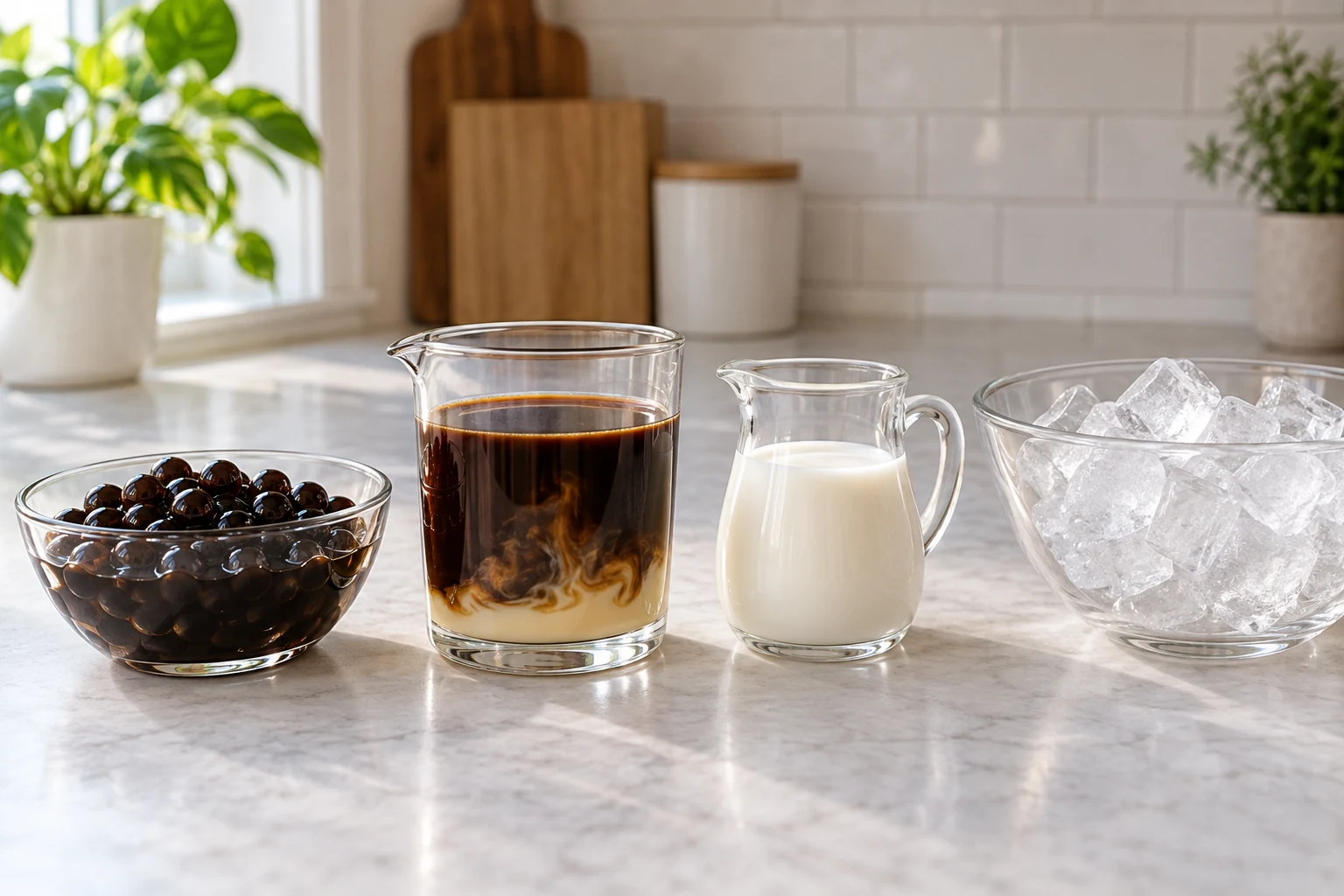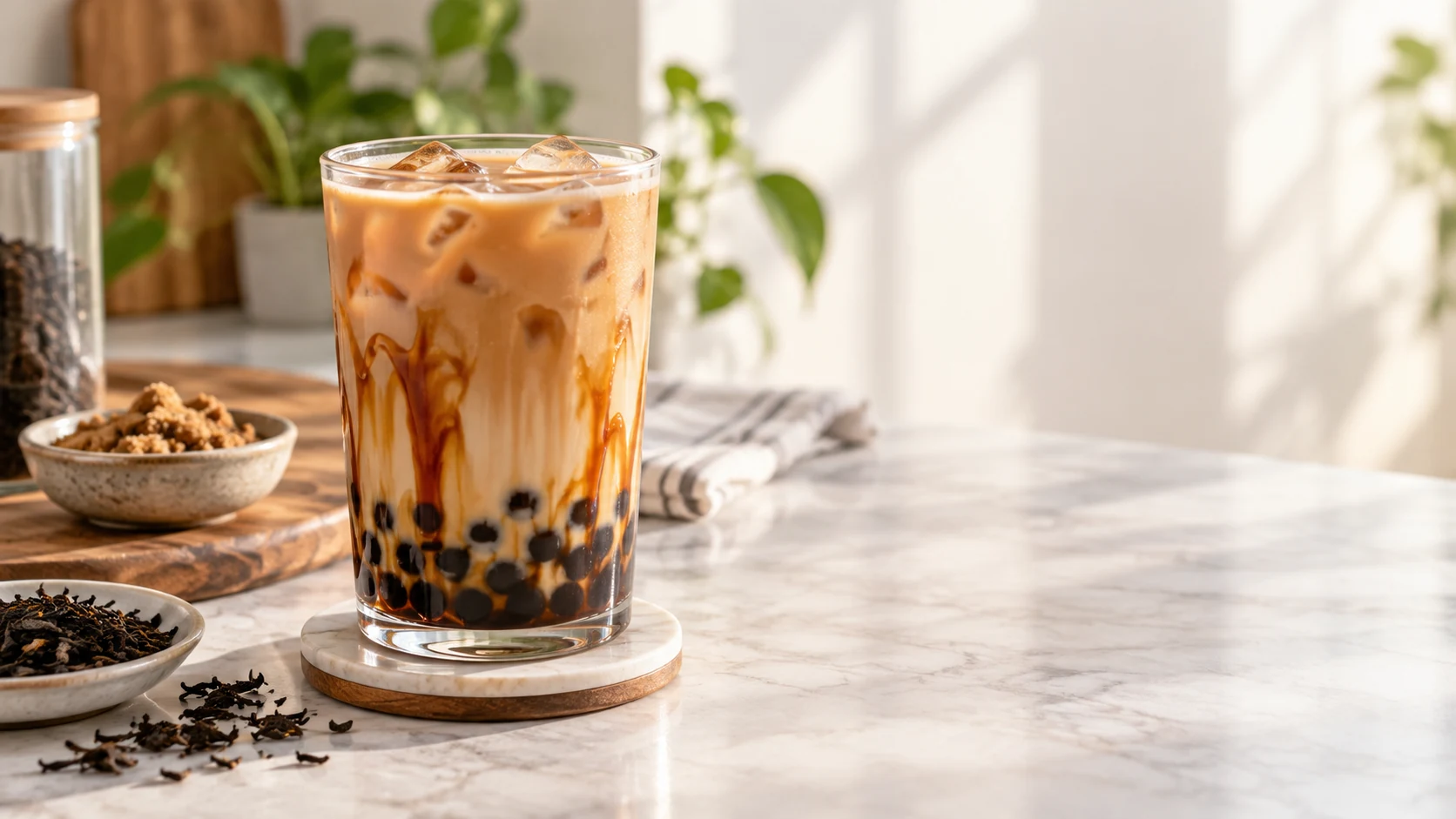
Brown sugar milk tea can become sweet in three different places: the pearls, the tea base, and the decorative syrup on the cup. Treating each addition as a full dose is how the tea disappears. A more useful method sets one sweetness budget, then distributes it according to purpose.
Set the sweetness budget
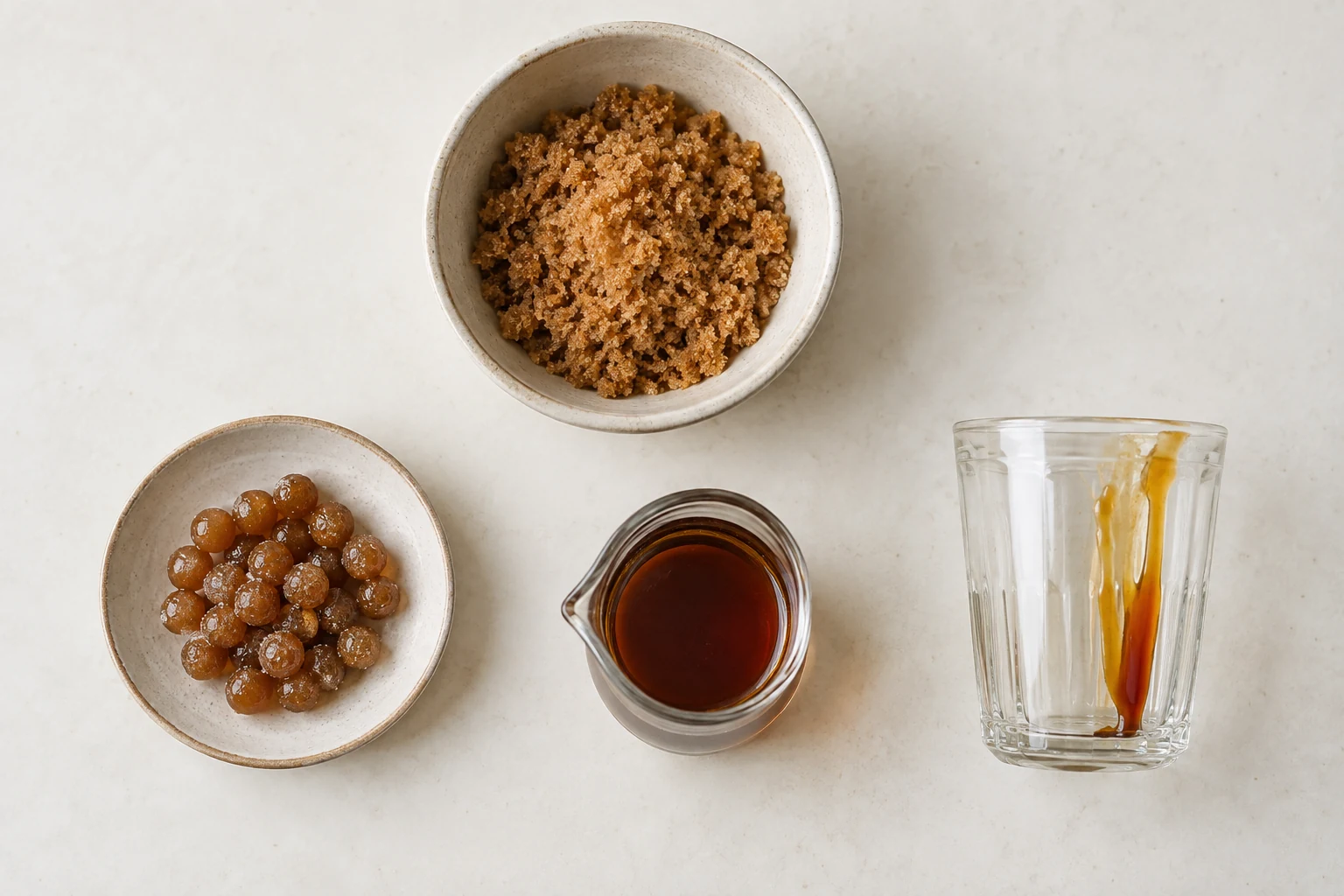
For one approximately 16-ounce drink, start with 2 tablespoons packed brown sugar for the entire cup, plus the following:
- one serving packaged tapioca pearls;
- 6 fluid ounces strong black tea;
- 4 fluid ounces cold milk or an unsweetened plant-based beverage;
- 1 tablespoon water for dissolving the sugar, with more only if needed;
- ice.
Think of the 2 tablespoons as a ceiling for the first pass, not a required target. Reserve about half for coating the pearls. Use the remainder only after tasting the assembled tea and milk. If your pearls or milk are already sweetened, begin with less.
Measure packed brown sugar consistently. A loosely filled spoon and a firmly packed spoon are not the same input. For easier repetition, weigh the sugar after establishing a version you like and keep that gram amount in the batch note. Do not interpret a darker sugar as automatically sweeter; color and molasses character affect flavor as well as appearance.
This approach separates function from decoration. Sugar on warm pearls helps flavor the topping. Sugar in the liquid adjusts the entire cup. A stripe on the glass is mostly a concentrated first sip unless it is thoroughly stirred, so it must come from the same budget rather than being an uncounted extra.
Brew tea that can carry milk
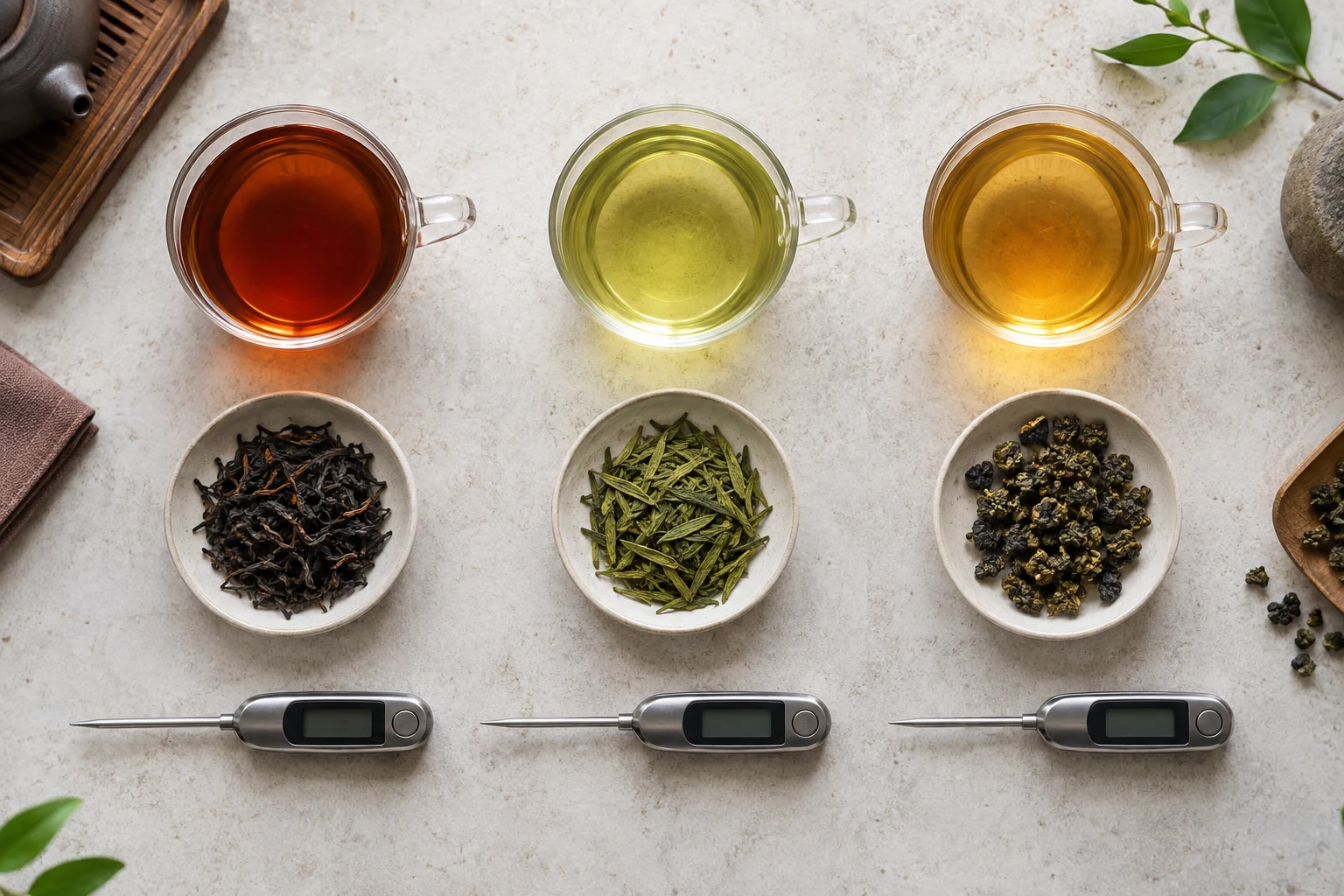
Measure 6 ounces of water and use one black tea bag or the label-equivalent amount of loose tea. Twinings currently suggests near-boiling water and a 3-to-5-minute steep for black tea. Follow the exact tea's directions when they differ.
Remove the tea completely when the steep ends and taste it before adding sugar. The base should be assertive because milk and ice will dilute it, but a harsh or excessively bitter base is not a sign of useful strength. For the next batch, increase tea material before extending the steep far beyond the producer's range.
Cool the tea in a clean covered container. Placing that container in an ice bath cools it without adding unknown water to the brew.
Let the pearl package control the clock
Read the cooking, resting, rinsing, and holding directions before beginning. Bossen's Express Cook Big Tapioca specifies a 1:10 pearl-to-water ratio, 25 minutes of cooking, and a 5-minute covered rest. A separate Bossen large-pearl recipe specifies 1:6, 30 minutes of cooking, and a 35-minute covered rest. The difference is too large to justify a universal instruction.
Cook your serving according to its own package. Once the pearls are ready and handled as directed, transfer them while warm to the brown-sugar coating. Do not hold finished pearls indefinitely while the tea cools; coordinate the timeline so both components are ready near serving time.
Make a bounded brown-sugar coating
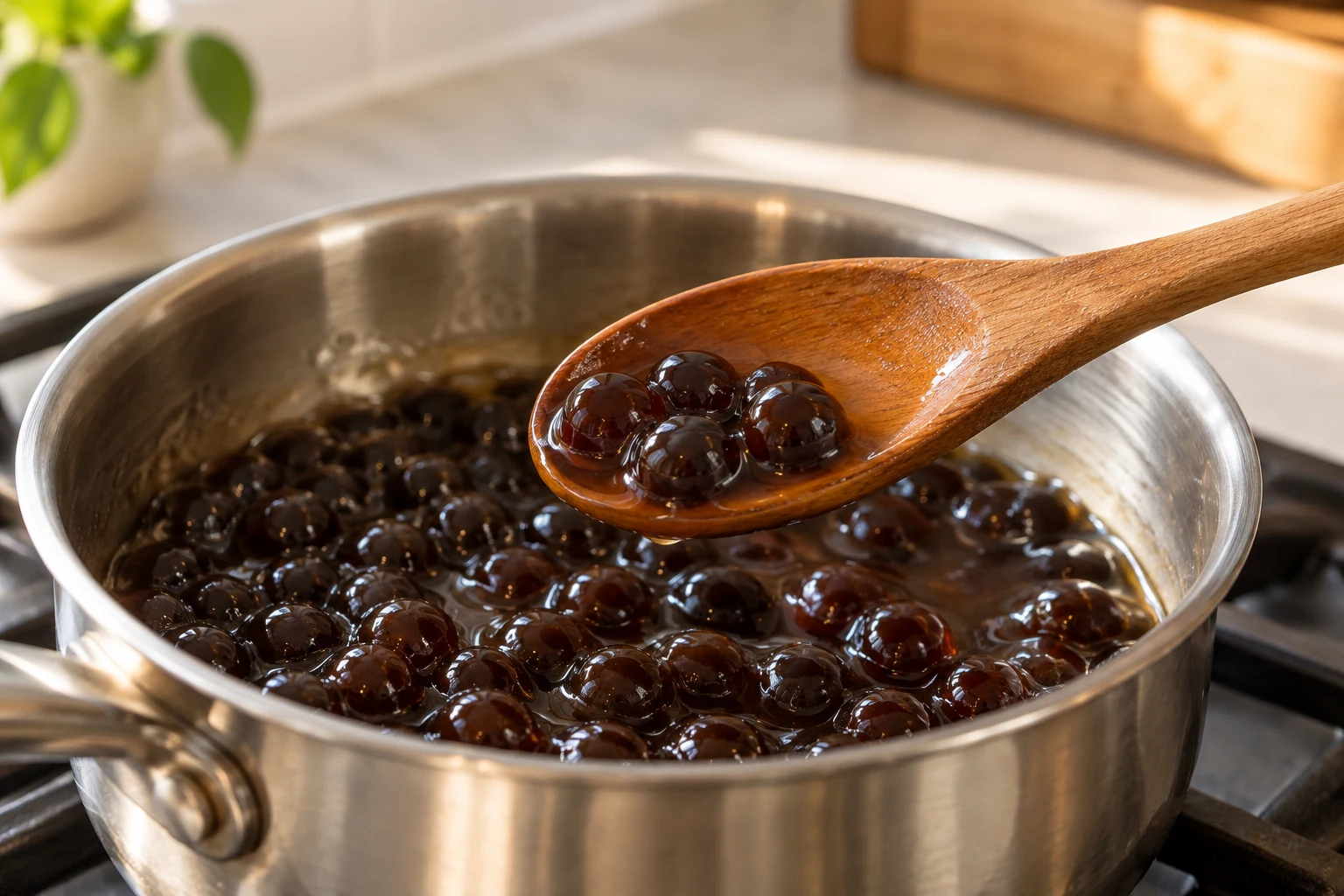
Combine 1 tablespoon brown sugar with 1 tablespoon water in a small saucepan. Warm gently, stirring until the sugar dissolves. Add the cooked, drained pearls and coat them for a short period over low heat, just until the liquid clings lightly. Remove from heat before it becomes a thick candy-like mass.
The goal is flavored pearls with a spoonable coating, not a second dessert sauce. Brown sugar color and moisture vary, so visual darkness is not a reliable measure of concentration. If the mixture becomes too thick to spoon, add water a teaspoon at a time while it is warm.
Observe the texture and stop conservatively. The pearl maker's own finishing direction takes priority if it conflicts.
Assemble, then spend the remainder
Place the coated pearls and their small amount of syrup in the bottom of the glass. Add cooled tea, then cold milk, and stir thoroughly. Taste before adding ice and before using the reserved sugar.
If the tea is balanced but not sweet enough, dissolve part of the remaining tablespoon of brown sugar in a small amount of warm water and add it by the teaspoon. Stir after each addition. If you want a visual stripe, use one teaspoon of that same syrup on the inside of the glass, understanding that the first unstirred sip will be sweeter.
Add ice last. If the drink was assembled warm, wait or chill the liquid rather than using extra ice as a cooling system. Meltwater does not reduce the amount of sugar; it only makes the cup simultaneously watery and sweet.
Diagnose the finished balance
Sweet but tea is absent: reduce liquid syrup first and strengthen the tea base on the next attempt. More milk will further hide the tea.
Pearls taste plain but the drink is very sweet: move part of the sugar from the liquid to the warm pearl coating rather than increasing the total.
Strong first sip, weak finish: a decorative stripe was not incorporated. Stir completely or omit the stripe.
Heavy and sticky: the coating was reduced too far or too much entered the cup. Thin the coating with measured water next time and use less of it.
Balanced before ice, watery afterward: cool the components and measure ice. Do not compensate with more syrup.
Store components conservatively
Serve cooked pearls within the window stated by their manufacturer. Both cited Bossen methods say to consume their cooked pearls within four hours, but that is product-specific, not a general promise for every pearl.
Follow the milk label and refrigerate perishable ingredients promptly. The FDA advises placing foods that require refrigeration in the refrigerator within two hours, or one hour when the air temperature is above 90 degrees Fahrenheit, and keeping the refrigerator at 40 degrees Fahrenheit or below. If time or temperature history is uncertain, tasting is not a safety test.
Finally, record the total sugar used, not just the amount in the tea. A sweetness budget works only when the coating, liquid, and decoration all appear in the same calculation.
Sources
- How to Brew the Perfect Cup of Tea Twinings
- Express Cook Big Tapioca Bossen
- Tapioca Pearl Recipe - How to Make Boba Bossen
- Are You Storing Food Safely? U.S. Food and Drug Administration